LEST
WE FORGET
WORLD
WAR 1
1914
“Well,
it’s a brand new year
and the world is at peace. The last 25 years has been a blessing in
terms of
Medical advancements as well as Transportation and Communication
improvements.
In the world of medicine we now have vaccines for diseases that had
been around
for 1,000’s of years. Due to the improvements to hospital sanitation,
fewer
were dying in hospitaI. New technology had brought about the X-Ray
machine as
well as other innovations. In the world of transport, the Suez Canal
would mean
that the distance travelled between Great Britain and India had almost
halved. The
newly opened Panama Canal meant that the South American route with the
tretcherous Cape Horn could now be by-passed. A bonus in safety, time
and fuel”.
“
Organisations such as the
Girl Guides and Boy Scouts had recently started up in the Country. The
London
Underground was being extended and the Metro Subway was opened in
Paris. The
Napolinic, Crimean, and the Boer war were now a thing of the past as
were the
many colonial wars. People genuinely believed we were heading into a
golden age
of peace,understanding and enlightenment. No one wanted any more Wars
let alone
a World War however their was two events niggling away in the
background.”
GERMAN NAVY
Since
the beginning of the
20th Century, Germany became a big industrial
power but never
enjoyed the export options of the British, French and Dutch. The
German’s had
decided to “eclipse” the Royal Navy so as they would have control of
the seas
forcing countries to trade with them. A slow “arms race” developed
where
Britain would likewise respond to changes by Germany. It
was not enough to start a war but it was a
worring development. As
a response to
the growing build up of Germany’s naval threat, 12 air stations were to
be
opened up, and operated by the Royal Flying Corps. The Flying Station
in
Montrose went operational in 1913, these stations were built to keep an
eye on
German North Sea activity as well as duties in search and rescue. The
Flying
Corps were the air-arm of the British Army before and during the first
World
War until it merged forming the RAF.
In another attempt to turn
the tide of
Germany’s increasing naval strength a new deep water repair yard and
safe
anchorage began construction at Rosyth, Fife. It was constructed in
1909 with a
large deep water basin and two dry docks with a third added in 1916.
War ship
repairs were carried out at berths in the outer basin.
THE
TWO BALKAN WARS
OF (1912 – 1913)
The
Balkan Wars were a
series of military campaigns fought in the Balkan region of Europe. In
1912
Bulgaria, Serbia, Greece and Montenegro attacked Turkey, securing swift
victories. Turkey surrendered most of her European territories on
condition of the
creation of a new state
(Albania).
The
British Animal Charity,
(Our Dumb Friends League) was founded in 1897. It launched the Blue
Cross Fund
to assist militery horses during the Balkan wars of 1912 and 1913. The
fund
continued during WW1 and by the wars end it had treated 500,000 sick
and
injured horses as well as 18,000 dogs. Their emblem in battle became a
Blue
Cross flag to distinguish it from the Red Cross for injured men. It
also gave
Blue Cross identification to all Animal Ambulances and Vet supply transportation, sent
to the Front
Lines.
Tensions
among the great
powers of Europe was considerably increased. Another Balkan War the
next year
had Bulgaria attacking her former allies. Worrying times but, to many
it still
seemed a long way away, until the 28th June 1914 in Sarajevo, Bosnia.
It was here that the
touch paper for WW1 was lit.
THE
ASSINATION OF
ARCHDUKE FRANZ FERDINAND
In
June 28th 1914 the arch
duke and his wife Sophie traveled to Sarajevo to inspect the Imperial
armed
forces in Bosnia and Herzegovina, which was annexed by Austria-Hungary
in 1908.
The annexation had angered Serbian nationalists, who believed the
territories
should be part of Serbia.
Princip was a Serbian
nationalist and a member
a terriost organization called “Black Hand” whose aim was independence
for
southern Slav peoples in the Austro-Hungary Empire. An earlier bomb was
thrown
at the archduke’s car as they drove to a reception but the device
bounced off
their car and exploded under the following vehicle and injured 20
people.
The
archduke and Sophie
arrived at the Town Hall a bit shaken up but they decided to go ahead
with the
rest of the programme. They were going to open a new Library, visit a
carpet
factory and they were to finish at the hospital to “check in” on the
injured
driver from the bomb attempt. All was going well until the
forward/leading cars
failed to turn off for the hospital but sped on ahead. The archdukes
car was
stuck on its own in a crowd of people and had stopped right beside
Princip and
a fellow conspirator.
Princip seized the moment
and shot the duke in
the neck and the duchess in the stomach. On their way to hospital the
duke told
the duchess “please live for the sake of the children”. The Archduke
was
mortally wounded, for a bullet had severed an artery before lodging in
his
spine. Sadly they both died within 15 minutes of each other. Pricip the
assassin
then tried to shoot himself but he was tackled by onlookers. He was
sentenced
to life imprisonment in an Austrian Prison, where he died 4 years later
from
tuberculosis.
“For
many years Europe with
its mass of small countries and principalities have been likened to an
old
house that only manages to keep standing as long as nobody disturbs
even a
single brick. In the Balkans in 1914 a brick had been disturbed”
THE
AFTERMATH
Following
the assassination
of archduke Franz Ferdinand in Sarajevo, German Emperor and Kaiser
Wilhelm II
encouraged the Austrians to adopt a uncompromising
attitude against Serbia. This meant that
Germany would be prepared to write a “blank cheque” to support
Austria-Hungary
even in the event of War. This decision would bring Russia into the war
to help
their Serbian Allies 29-30th July. The Tsar
Nicholas II would send
1,200 troops to assist Serbia. Germany then went to war with Russia and
France.
On 28th July 1914 Austria declared war on Serbia
So,
the system of allegiances
by which the nations of Europe hoped to protect themselves looks set to
bring
about their destruction. The latest recruit to the European conflict is
Great
Britain. H.M Government had given Germany until 11pm G.M. (August 4th
1914) to signal it’s willingness to withdraw from Belgium. The German’s
refused
and started to head to the coast to take control of the Channel ports.
THE
SIDES
THE
TRIPLE ENTENTE
GREAT
BRITAIN
FRANCE
RUSSIA
(UNTIL
1917)
ITALY
(1915
+)
ROMANIA
(1916 +)
CANADA
INDIA
AMERICA
(1917 + )
AUSTRALIA
NEWZEALAND
SOUTH
AFRICA
THE
TRIPLE ALLIANCE
GERMANY
AUSTRIA-HUNGARY
TURKISH
OTTOMAN EMPIRE (1915 +)
BULGARIA
(1915 +)
GERMAN
EAST AFRICA (UNTIL 1915)
NEUTRAL
EUROPE
SPAIN
HOLLAND
SWEDEN
NORWAY
SWITZERLAND
DENMARK
NEUTRAL
SOUTH AMERICA
ARGENTINA
CHILE
VENEZUELA
************************************
On
1st October
1914, the commissioner of the Metropolitan Police ordered that bright
exterior
lights were to be extinguished or dimmed in the London area and street
lamps
were to be partially painted out with black paint. In other regions of
the
country the decisions were left to local authorities. Confidence was
high that
the War would all be over by Christmas.
One
month previous on
July 31st 1914 Kaiser
Wilhelm II of Germany rejects a British offer of mediation in the
Austro-Serbian crisis as insolence.
Statement
by Lord Grey on
August 3rd 1914 on the eve of war.
“
The lamps are going out
all over Europe, we shall not see them lit again in our lifetime”.
___________________
On
August 4th
1914 Germany invades neutral Belgium, the invasion of Belgium was a
violation
of its neutrality. It was the first act of WW1 and was designed to give
the
German troops control of all the French and Belgian Channel ports which
would have
made the British struggle
to land
Supplies and equipment.
On 4th
August 1914, King George V
declared War on the advice of
his Prime Minister
Herbert H. Asquith.
World
War 1 saw many firsts,
it marked the first use of TANKS, AIRPLANES, AIRSHIPS, BATTLESHIPS,
GRENADES,
FLAMETHROWERS, TRENCH WARFARE, LETHAL GAS as well as U-BOATS.
THE
DEFENCE OF THE REALM ACT / THE RIOT ACT
The
Defence of the Realm Act
was passed in parliament on 8th August 1914.
This Act gave the
War-time government many powers in order to strenghten the homeland
position
during war. These requirements could change at anytime, becoming less
strict or
more strict depending on the situation. See below a list of
restrictions from
WW1.
1)
The Requisition of
Buildings, Land or Boats.
2)
Alcoholic beveridges
“watered down” in Pubs near important war-work.
3)
Public gatherings or
protests reduced to a manageable level.
4)
No Alcohol allowed on
trains. No buying rounds or treating.
5)
No churchbells allowed to
ring.
6)
From 1916 no Londoners
can whistle for a cab between 10pm-7am.
7)
Restrictions on Press
Reporting and other forms of Censorship.
8) £5 reward to be paid to
the National Homing
Union for information leading to the prosecution of a person shooting
homing
pigeons.
9)
The back-light on Big Ben
was switched off in 1916 to prevent it acting as a beacon for German
Airships /
Aeroplanes.
10)
Rationing of Food or
Fuel was an option of the Government.
11)
Control of the Railways
is passed to the government.
12)
Pubs open later and
close earlier.
In August 1914 Lord Kitchener, the Secretary of State for War realised that Britain needen a much bigger army. He made a direct appeal to the men of Britain. Posters were displayed with Kitchener pointing his finger and saying “YOUR COUNTRY NEEDS YOU”.

In
all 54 million posters
were issued, 8
million letters were sent, 12,000
meetings were held, 20,000
speeches
were given by military spokesmen.
In the first week of the war 3,000
men a day were recruited
and by the end of the year a total figure of 1,186,337
had enlisted!
* When
Austria – Hungary began making up
recruitment posters they had to be written in 15
different languages to allow for all
the different ethnic groups within their Empire. *
OVER
30 NATIONS DECLARED WAR BETWEEN 1914 – 1918 ON
WHAT WAS ESSENTIALLY A WAR BETWEEN EUROPEAN EMPIRES.
THE
GREAT MOBILISATION
“Great
Britain has been
fortunate to be an island nation with a long sea-faring tradition. The
number
of ports around the country allows for no-one port to be over-used and
thus
more vunerable to enemy action. When the British and French stopped the
Germans
taking control of the Belgian and French ports at the 1st
Battle of
Ypres the British could now re-supply the front relatively easily.
The northern half of the
country would give
deep water protection to the British Fleet whilst the Southern coast
would be
involved in direct supplies to France with new harbours being specially
built
for the purpose.”
DEEP
WATER ANCHORAGE : SCAPA
FLOW , CROMARTY FIRTH, LOCH EWE, ROSYTH, LAMLASH BAY, (ARRAN), MILFORD HAVEN,
HAULBOWLINE,(CORK),
SOUTHAMPTON.
SUPPLY
PORTS : TO GET MEN AND HORSES ACROSS TO
FRANCE :
SOUTHAMPTON, DUBLIN, GLASGOW, QUEENSTOWN, (COBH) BELFAST
& JERSEY.
MECHANICAL
TRANSPORT : LIVERPOOL,
AVONMOUTH, DOVER.
SHIPBUILDING
REPAIRS :
BELFAST, GLASGOW, PORTSMOUTH & LITTLEHAMPTON among others.
LANDING
PORT : PLYMOUTH
/ DEVONPORT would
become a landing port for US Troops prior to embarking for France. On
arriving
in France they docked at St NAZAIRE.
RICHBOROUGH
: A
new Railway Station, Line
and Port were built in Richborough in Kent as Dover reached its full
capacity
during the war. Known as the secret harbour, it transported tons of
materials
for the war effort on train wagons from the tracks to ferries. It
carried more than
1.2 million tonnes of supplies and
munitions. The secret harbour itself was camouflaged with all its
buildings
painted to match the background of a low flying area.
This
new harbour was
constructed to provide the B.E.F with heavy equipment – Tanks, Guns,
Railway
Locomotives, Ammunition, Horses and Fuel. It was here that the first
use of
specially designed sea going ROLL ON / ROLL OFF ferries began
operation.
Locomotives and railtracks had to be shipped across to France because
the Field
Guns were so large and heavy they had to be transported to the battle
area by
rail.
NEWHAVEN
: (STORES)
MILFORD
HAVEN : Was
situated on the
South-West coast of Wales and was one of the most important bases. It
played a
vital part in the Naval defence of the Irish Sea as well as anchorage
for the
British Fleet.
*Tired
soldiers and sailors coming home
on leave would be greeted by volunteers providing free refreshments
paid for by
donations. The free Buffet at Waterloo Station fed more than 8 million
soldiers
and sailors between 1915 – 1918. *
At the beginning of WW1 many
British fishermen
entered the services and swapped
the
familiar hazards of life at sea for the dangers of the Trenches or
naval work.
For those who remained at home, fishing became severely restricted.
Fishermen
were left with small areas to fish in, they also had to contend with a
constant
U-boat threat. On top of all these problems there were many fishing
boats that
were requistioned for the Navy for coastal patrols / minesweeping
duties.
In
August 22nd
1914 the British Expedionary Force (B.E.F) arrived in France to support
the
left wing of the French Army against German attack. The Allies
prevented the
Germans from “taking” the Belgian and French ports which would now
allow the
British to re-supply the war effort from the English Channel. The
British
Expeditionary Force was first established in 1906. They are best
remembered
from the evacuation of the beaches of Dunkirk in 1939. During WW1 the
principle
ports to unload British Men and Supplies was BOULOGNE, CALAIS, DUNKIRK
& St
NAZAIRE.
In
the early months of the
war there was panic buying and hoarding of food in Great Britain,
however the
government did not see the problem as critical and no rationing was
introduced
at that time.
TRENCH
WARFARE
“During
the first few months
of the war the casualties on all sides were horrendous. Men with little
or no
protection were up against Shelling, Machine Gun fire and grenades. The
B.E,F
had lost almost all it’s professional soldiers and were relying on
recent
volunteers. The decision was taken to form a series of Trenches of
protection
to keep the men relativly safe from the military bombardment. The
German forces
did likewise and from this time onwards the First World War became a
war of ATTRITION,
a slow wearing down of the enemy with little ground gained.”
The
British Troops were responsible
for the digging of their Trenches with the help of Chinese labourers.
The
Chinese did not play a combative part in WW1 but they gave men to the
allies to
assist in building and tunneling projects. The
length of the Western
Front was massive, it stretched from the Belgian North Sea coast all
the way to
the Swiss Border. The Trenches were not built in a straight line but
were
zig-zaged, built to a certain length. This zig-zag was done to prevent
enemy
troops from getting access to a section of the trench and firing all
the way down
the line causing untold devastation. With the zig-zag they could not
fire down
a line of Trenches just that one Trench.
In
British Trenches,
drinking water was transported to the Front Line in Petrol Cans. It was
then
purified with chemicals. In the case of the British they used Liquid
Chlorine
compressed in steel cylinders, other armies used salts. To help
disguise the petrol
taste the water was boiled up and made into tea and poured into their
individual water bottles and carried cold by the men.
Duckboards
or trench grating
were used throughout the First World War usually placed at the bottom
of the
Trenches to cover the sump pits drainage holes. The duckboard was fine
as long
as it was dry, which was not very often. According to the soldiers,
duckboards
came by their name because anyone walking on a wet duckboard was liable
to
slide off them, much like water slides of a duck’s back!
A
Puttee was the name given
to a covering for the lower part of the leg from the ankle to the knee,
alternatively known as Legwraps, Bindings, Winingas or Wickelbander. A
Puttee
is a cloth band that was wound round a soldier’s leg from the ankle to
the
knee. They were designed to provide support when walking and protect
against
harsh weather conditions. They
also prevented
debris and water from entering the boots. Khaki coloured wool Puttees
were
widely worn with ankle boots by British Empire soldiers during the
First World
War.
There were 2 men given the
job of Sanitory
Personnel who had the difficult task
of keeping the latrines in good condition for each company. They would
routinely
pour Creosote (a strong smelling, anti-septic, wood preservant) into
the cess-pits
and latrines to try and improve the smell. The cess-pits were dug 1.5
metres
deep. Not an easy task when your fighting against the smell of human
waste, decaying
bodies, stale food dead
rats, and also
the smell of rotting clothes, oil and gunpowder. Rats would eat any
soldiers
unable to defend himself.
Hot
Food was not supplied to
the Front Line soldiers until late 1915 perhaps the Military Top Brass
felt the
war would be long over long by then, it’s difficult to say. What I can
say is
that a biting cold winter was no time for cold food. The men would try
anything
they could find to heat their food up including candles. Some soldiers
lucky
enough to have a small stove would boil up any food available including
stale
biscuits, or add these biscuits to the canned food provided, this
became known
as Trench Stew.
Thankfully
the men at the
Front and the men at sea would have the benefit of hot drinks of Tea,
Coffee or
Cocoa thanks to the 19th century inventions of
Evapourated Milk and
Condensed Milk. The main meal for the men would remain tins of Bully
Beef
(corned beef). Another standard ration was Maconochie beef stew and
biscuits, (not
your fancy
biscuits).
Maconochie’s had been
providing British Army Rations since the Boer War. The company had been
set up
by two brothers and had factories in Fraserburgh, The Isle of Dogs,
London and
Lowestoft in Suffolk. There they also had food processing plants and
made many
preserved foods. When
the stew was
heated it had a reasonable appetising aroma but when it had to be eaten
cold
there was little smell or taste and the fat inside the can became a
cold
congealed lump.
Sleeping
arrangements were
very basic, a large hole in the ground reinforced to stop loose earth
from
shelling falling on top of them. Some men slept by themselves or with a
friend
for body warmth. They would dig a hole into the wall of the trench and
board up
the top and sides to prevent loose disturbed earth landing on top of
them. The
average nights sleep was only 2 ½ hours.
If you thought the latrine
attendants had a
poor job, spare a thought for the barbed wire maintenance men. During
heavy
artillery the metal spikes that held the barbed wire in place would
become
dislodged and with further shelling the barbed wire would “turn-in-on
its self”,
into a big ball giving no protection to the Trench Line. A couple of
“volunteers” would need to go out into no-mans-land and stretch out the
barbed
wire and re-peg it in place. Although the enemy Trench could be fields
away
sometimes no-mans-land was as little as 30 metres (30 yards). Sandbags
were
constantly being replaced to strengthen the Trench walls which could
collapse
due to heavy rain seeping through the soil behind the
Trench walls or from burst bags at the top of
the Trench, caught up in cross fire.
Stretcher
Bearers were the
first to reach a wounded soldier so they became responsible for
administering
initial first-aid (an emergency field dressing) Gun shot wounds would
be dealt
with by applying an iodine bandage to the impact wound and then another
bandage
to the exit wound, they would then get the wounded off the battlefield
to
Casualty Clearing Stations or Hospitals behind the Line. Casualties
among
stretcher bearers was high and there were times when they never had
enough stretcher
bearers left to effectively remove wounded men from the battlefield. Eg
: during
the Battle of Passchendaele it took the stretcher-bearers 3 days to
clear the
wounded from the muddy fields. Four men would carry a stretcher 3 miles
to
safety – a trip that took them about 4 hours. Despite the cover from
enemy fire
all sides still took a great deal of casualties as well as infections
and
disease.
CONSCIENCEOUS
OBJECTORS
Around
16,000
men refused to take up arms or fight durind the First World War. This
was
for a number of reasons, Religious, Moral, Ethical or Political
reasons. They
were often treated harshly and vilified.
They
all had to go to a
Military Service Tribunal to see if there claim “held water”. 4,500
went to work on farms for work of national importance. 7,000
became
Stretcher Bearers. 6.000 men
were forced into the Army, if they refused orders they would spend 2 Years
in Prison. 142 were imprisoned for life and 17 were
given the death penalty.
OVER
16 MILLION
ANIMALS SERVED IN THE FIRST WORLD WAR.
Animals
were used for
TRANSPORT, COMMUNICATION & COMPANIONSHIP. There was HORSES,
DONKEYS, MULES
& CAMELS that carried Food, Water, Ammunition and Medical
Supplies to men
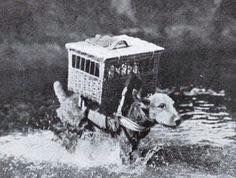
at the Front. Dogs and Pigeons carried messages and light packages.
There were
also CATS, CANARIES, MICE, SLUGS & GLOWWORMS. Dogs and Cats
were
responsible in keeping the infestation of rats at bay. Cats were also
good at
gas, early detection. Due to the communication lines being damaged by
artillery
shells dogs made excellent runners from A-B because they were closer to
the
ground than a human and a lot quicker. Canaries and mice were used to
detect
the presence of gas in mining projects. Slugs were particularly
sensitive to
Mustard Gas and Glow Worms made a safe back-light for reading maps in
the
Trenches or letters from home which would be read, reread and read
again.
The
battles and Trenches
were often in muddy fields with dificult terrain, off the main roads.
Trucks
could not make it across these areas so there was a great reliance on
animals especially
pack animals. Thousands of Cats were “drafted” into the war the
majority were
from American and British Cat owners. Britain had all but run out of
horses so
they gratefully accepted Mustangs from America, The Mustang is a
free-roaming
horse from the Western U.S.A. They are decended from horses brought to
America by the
Spanish. They are known
as wild horses, but were descended from once-domesticated horses and
are
actually feral horses. Described as a small hardy naturlized horse.
*The
British began the First World War
with just one war dog! It took a
civilian dog breeder Edwin H Richardson to convince the
military
establishment of the value of using dogs. Richardson who had wrote an
article
on the subject in 1911 had previously trained and supplied ambulance
dogs for
the Russian army during the Russian-Japan war of 1904. He managed to
convince
the British War Dept who gave him the task of starting the British War
Dog
School. He began training Sentry and Patrol dogs in
autumn 1914 using mainly Airedales and farm
Collies.*
Pigeon’s were litterally
bused in Double
Decker buses (Like the omnibus you see in the old grainy black and
white news
reels) they were converted into portable pigeon lofts and they would
see
service in Belgium and Northern France dragged along by horses to take
them
closer to where they were needed. This gave the Army a quicker response
for the
need of pigeons. During WW1 the Germans had Photographer-Pigeons with
small
cameras strapped to the pigeons stomach for reconnaissance of the
British
Lines. This procedure only stopped with the introduction of aerial
reconnaissance airplanes.
The
origins of Seeing Eyes
for the Blind or Guide Dogs for the Blind began during WW1. Germany had
a large
dog training programme with many German Shepherds trained as sentries,
message
carriers and for light transportation but as the war progressed more
and more
German Soldiers were blinded in battle. This led to the dogs becoming
increasingly used to assist these soldiers. After the war’s end the
large
number of Blinded War Veterans led to the the organization of a Guide
Dog
Programme in Germany which was later adopted world-wide.
The
German Trenches
were built for the “long haul” and included bunk beds, furniture,
cupboards,
water ranks, basins with taps, and electrical light.
THE
CATS PROTECTION
The
Cats Protection League
did not exist during WW1 however there were many concerned people that
were
horrified by the Bombings causing many homeless and injured pets.
People would
visit bombed areas to check on the cats and encourage owners to keep
their cats
in at night. Some women would “shop around” to find food scraps and
place them
on Street Corners.
In
1927 The Cats Protection
League was founded at a meeting at Caxton Hall in London, under the
chairmanship of Miss Jessy Wade. The Cats Mews Sheet was founded in
1931 with
Jessy Wade as editor. The news sheet continues to this day. There was a
name
and logo change in 1998 and the Cats Protection League was shortened to
CATS
PROTECTION.
The welfare of these animals still continues to this day.
___________________
In
WW1 there were 3 major stretches of Trenches.
The WESTERN FRONT that stretched from the Belgian coast – Swiss border,
over
400 - 500 miles,
(800 km) appproximately.
The
EASTERN FRONT stretched from the Baltic Sea in
the north to the Black Sea in the south. It involved most of Eastern
Europe,
and stretched deep into Central Europe as well. A distance of 1,000
miles or
(1,600km).
The
fighting in the Alp mountains, (THE WHITE WAR)
between the Italians and the Austrians stretched for 372 miles or
(600km).
The
high number of cats that
were drafted in WW1 was due to two reasons : 1) The men had been
throwing waste
food into no-mans-land or behind the trench perhaps believing the war
would
soon be over or they would soon be on the move. Sadly neither were true
and the
number of rats grew many fold. 2) They made good gas detectors and
could
quickly run out of harms way.
“They
said it would be all over by
Christmas, pity they never said which one!”

2)
The Western Front was not
a few miles of Trenches but stretched from the Belgian coast all the
way to the
Swiss border. Airedale dogs were big terriers and assisted the cats in
keeping
the rats/disease down.
During
WW1 as the conflict
began to take greater casualties, guard dogs took over the sentry
duties of all
the British ammunition factories and government war factories thus
allowing
more soldiers to be released to the Front. Germany also had a war dog
programme,
German dog handlers worked mainly with Airedales, Boxers, Dobermans,
and German
Shepherd dogs.
*American
Corpral Lee Duncan and other
members of the 136th Aero Division were on a
scouting mission when
Duncan discovered 5 German Shepherd puppies at an abandoned German
War-dog
station. Duncan’s pup Rinty, became the units mascot and in time he
became the
country’s most beloved canine movie stars : Rin Tin Tin. *
During
WW1, Germany had an
advanced programme of war trained dogs, one branch of dogs were known
as Sanitatshunde
or (Sanitary Dogs). These dogs were equipped with saddlebags
of medical
supplies, they sought out the wounded and gave comfort to the dying.
One
unusual dog used during
WW1 was the YMCA cigarette dogs. These small dogs were sponsored by the
YMCA
and had the task of delivering cartons of cigarettes, attached to their
sides like
panyards, for the soldiers stationed on the Front Lines.
THE
SSPCA
The
SSPCA or Scottish Society
for the Protection of Cruelty to Animals was set up in Edinburgh back
in
December 1839 when they began to champion animal welfare to protect
them from
harm. One of its first aims was to improve the welfare of cart horses.
Over the
next Century and a half the charity grew and merged with other SPCA’s
in
different areas of Scotland. In its early days the organization was set
up on
the back of one women’s conviction that animals deserved better.
This Lady, Martha Gibson,
sadly passed away
just a few years later but her vision has endured to this day. The
SSPCA had
it’s first Centenary just as the Second World War began. There would be
less
cart horses but plenty homeless pets and sea birds contaminated in oil
and
diesel from sea warfare. Since the last few years the SSPCA have built
a
Wildlife Rescue Centre in Clackmannanshire and the
battle continues to help and protect all
animals in need.
THE
RSPCA
The
RSPCA operate in England
and Wales but not in Scotland. The RSPCA and the SSPCA are not
affiliated and
are different organizations. The RSPCA is the oldest animal charity
that was
founded in a London Coffee Shop in 1824 to prevent the abuse of
carriage horses
in the days before automobiles. Horses were driven through freezing
cold
winters and stiflingly hot summers often with little food, water or
rest. As
years roll by and perhaps the animal priority’s have changed but sadly
there
are always many animals needing help and protection.
__________________
During
WW1 the plight of the
messenger pigeon was more precarious with enemy snipers being rewarded
for
shooting them out the sky. One safeguard used by the British was to
have the
pigeons dyed black so as to be mistaken for a common crow. During both
wars,
pigeon loft owners had to take a sworn oath never to divulge the location of the birds or
the nature of the
messages.
British
Mine Sweeping Ships
/ Boats operating during WW1 carried pigeons so that in the event of a
U-boat
attack a pigeon could be released from the sinking ship. The pigeon
would have
a message confirming their position, which would hopefully increase
their
chance of rescue.
_________________
September 23rd
1914 : The German
submarine U-9 has sunk three British Cruisers off the Dutch coast, with
1,500
lives lost. The war at sea had begun in earnest on August 28th,
when
a British fleet raided the Heligoland Bight and sank four German ships.
Todays
battle off Holland
shows the new shape
of sea warfare. Powerful warships were helpless against the silent
attack of
one small submarine. The German fleet is outnumbered and blockaded in
the North
Sea, but U-boats are not so easily stopped. German mines have also
claimed
several British ships. Two U-boats had been spotted in Scapa Flow, it
was
decided to sink some older ships to block off the gaps between the islands on the Eastern
approach to Scapa
Flow to keep any U-boats out. In WW2 these gaps would be permanently
closed as
part of the Churchhill Barriers. (
Having a U-boat in Scapa Flow was akin to
having a hungry fox in a chicken coop)
__________________
A
WW1 Seaplane Station was
established at Thurso in Caithness within days of the outbreak of war.
The
planes were used to check for enemy surface ships making their way
through the
Pentland Firth towards Scapa Flow. The Seaplane Station at Thurso would
later
merge with the Seaplane Station at Scapa Flow.
__________________
THE
BATTLE OF MARNE :
Sometimes called The Battle of Paris was an early battle in WW1, in
which
General Joffre’s French armies and the British Expeditionary Force
halted the
German forces that had crossed the Marne river and were approaching
Paris therfore
depriving the German’s of a swift victory.
*One
amazing event from this battle was
that the French required greater military support so they literally
bused in
thousands of French soldiers using Paris Taxi cabs! *
WW1
MUSIC HALL
“Music
Hall’s gave
performances up and down the country in cities and larger towns for
family
entertainment. It also helped to strengthen patriotic feelings and was
a place
of encouragement for men to inlist for the Army or Navy.
The
Musical Halls provided a
variety of acts, and in WW1 they would finish with a melody of war
songs to
boost the audience and help create a feel-good-factor.”
The
Music Halls would have
different acts such as Singers, Musicians, Dancers, Acrobats and Comedy
Sketches and sometimes short plays. One woman’s comedy sketch would be
copied
up and down the country and proved to be a great boost to war
recruitment. Her
name was Vesta Tilley and she became known by her character “Tommy the
Trench”
and another sketch she called “Sailor home on leave”. After her
performance men
could get information/leaflets on recruiting from an Army recruitement
officer.
If any young men “disappeared” to the toilet at this point, when they
returned
a woman sitting close by would pluck a feather from her hat and set it
on the
young man’s seat as a symbol of cowardice. (
A terrible injustice if the poor man was
simply suffering from a bad case of the “two bob bits”)
After
her sketches there
would be a big sing-song with all the audience joining in, and
featuring all
the most popular songs of the day.
IT’S
A LONG WAY TO TIPPERARY :
This song had never been heard in Britain until it was sung by the
Connaugh Rangers (Galway) as they marched through the town of Boulogne,
France.
Tipperary county and town lies near Limerick.
PACK
UP YOUR TROUBLES IN YOUR OLD KIT BAG :
When brothers and Music Hall stars George and Felix Powell penned the
song “Pack up your Troubles in your old Kit Bag” they thought it was
piffle and
abandoned it. However the tune was pulled from a drawer marked “duds”
for a
contest to find a marching tune for the troops-and it won!
KEEP
THE HOME FIRES BURNING :
This song became an anthem of WW1 and was popular on both sides of the
Channel. The song evoked a strong sense of homecoming and a release
from the
horrors of war. David Ivor Davies was an Actor, Dramatist, Singer and
Composer.
Ivor moved to London in 1913 with his mother. She set him up as a voice
teacher
/coach. He adopted his mother’s middle name Novello to become Ivor
Novello. His
first big hit in 1914 was “Keep the Home Fires Burning”and was
enormously
popular during the First World War.
GOODBYE
DOLLY GREY :
Although this song was not a WW1 song, it was popular amongst the WW1
soldiers and families. The sentiments of the song are very similar to
WW1 songs,
Dolly Grey talks about a loved one leaving to fight the Boers and the
strong
desire to see him return safely.
GOOD-BYE-EE
Weston and Lee got the
inspiration for this song from factory girls, during a break, calling
out
goodbye to marching soldiers making their way to Victoria Station, it
became a
hit in 1917.
WE
DON’T WANT TO LOSE YOU : “But
we think you ought to go; For your King and your Country both
need you so”. The above songs would get the audience worked
up with
patriotic fevor as they sang along, and finaly all would be upstanding
for ;
God Save the King.
WERE
HERE BECAUSE WERE HERE BECAUSE :
This anti-war song would never be played in the Musical Halls but it
was
popular with the men in the Trenches. The song expresses the futility
of the
war that no one can explain why they were there. It was sung to the
melody of
Auld Lang Syne.
ABIDE
BY ME :
Written by Henry Francis
Lyte, this hymn was very popular with the men in the Trenches when they
were in
a thoughtful reflective mood and they would often sing together. It was
the
song Edith Cavell recited on her way to her execution. This was not not
sung on
the Music Hall circuit.
KEEP
RIGHT ON TO THE END OF THE ROAD :
When Harry Lauder was at his peak and considered the most popular
entertainer in the English -speaking world he was dealt some terrible
news. His
only son John, who was a Captain in the 8th
Argyll and Sutherland
Highlanders was killed in action on 28th
December 1916 at
Pozieres during WW1. In time John’s death
would be the inspirational for Harry to write a song to help others to
“keep
Going” despite all life’s adversity, and so the song, “Keep Right on to the End of the Road” was
born. Although
this song never appeared until after the War it still “spoke out” to
all those
suffering from gas inhailation, lost limbs, disfigured features and
many women
who had lost loved ones.
__________________
With
women and children in
the audience, the material was never too risque. Most Music Hall songs
were
sentimental and/or comic takes on everyday life, as well as spoofs of
the rich
and famous. Some well known artists that got their start in the Music
Halls includes
Harry Lauder, Stan Laurel, Gracie Fields, Charlie Chaplin, Lupino Lane,
Marie
Lloyd, Vesta Tilley and, Little Titch who could bend down ( without
using his
hands) and place a top hat on his head. Up and down the country the
bigger
venues could attract 1,000 + audiences with up to 3 shows a day but the
coming
of the cinema was to be a big blow to the Music Halls
In
North America, Vaudeville
was a style of multiple act theatrical entertainment which florished in
America
from 1880’s -1920’s in some ways similar to British Music Hall,
featuring
rousing songs and comic acts. Germany
had its Cabaret and brass Bands. In France at this time there was a
song called
La Madelon or Quand Madelon which in English means “I’ll be true to the
whole
regiment” this song
was very popular
with French troops during WW1 in France.
THE
CHRISTMAS TRUCE
OF 1914
****************************************************************
In Britain, at least there
had been a mood of
optimism that the war could all be over by Christmas. Less than 3
months later
the more realistic were aware that this conflict was not just an
isolated war
but a World War. By the end of November the Western Front stretched
over 500
miles from the Belgian coast to the Swiss border and the opposing
armies were
deadlocked in deep trenches. Already the loss of life had been enormous
on both
sides and there were few professional soldiers left, with recruitment
having
been stepped up as fast as possible.
Christmas
for the men at the
Front could barely be more miserable, spent in Trenches at below zero
temperatures
bleak and cheerless. One advantage of the biting cold weather was at
least it
froze up the mud all around. Darkness came and the men settled down
whilst
longing for home. However in one sector of the Front there was movement
and not
the usual movements of war. The British had look-outs that noticed a
number of
small lights along the German Front Lines. Later still, they heard the
rising
buzz of voices and then music from a harmonica or the like. As the
sound
floated across no-man’s-land it became apparent they were singing
Christmas
Carols!
Overcome
by the spirit of
Christmas men from both sides began to sing carols. Some Germans came
across
with a Christmas Tree while singing Stille Nacht, (Silent Night) and
then some
British soldiers started to leave the Trenches and walk across
no-man’s-land,
there were no gun shots. The men amazingly met and started to greet one
and
other. Soon more men were scrambling across the parapets, the trickle
became a
rush as platoons hurried across to shake hands. Cigars and cigarettes
were
exchanged and toasts were made with Schnapps and Whisky. All the men
took out
photos of their families back home from their wallets and a rough
converation
was achieved thanks
to a German soldier
who had lived in America pre-war and understood English.
A
suggestion was made to
mark Christmas Day by having a football match which the Germans won
3-2.
Afterwards the men all agreed that there should be no more shooting
until after
midnight. Another heart-warming story from the Christmas Truce that
took place
on no-mans-land was : A German soldier was seen errecting a small
make-shift
hut. Apparently before the war he was a barber, so he decided to give a
free
haircut to both the German troops and the British troops!
“
The Christmas Day
Truce of 1914 gave the world a much needed boost in humanity and hope.
The
guns, shells and, grenades fell silent, having no place amongst newly
found
friends.”
“In
this world there have
been many wars, some have even been necessary such as WW2, however WW1
was to
test mans endurance beyond breaking point. For what?
One
of the last survivors of
The Christmas Truce was a man called Tom Anderson from the Angus Region
of
Scotland. When he was interviewed about his greatest memory of the
Truce. He
replied, “the haunting weird silence as the guns fell silent”.
CHRISTMAS
IN THE
TRENCHES
Gifts
from loved ones began
arriving across the English Channel, there was safety razors, gloves, lighters and
toolkits (small practical
tools). Millions of packages made their way to the men at the Front.
The
soldiers who delivered these presents were known as (Santa’s in
Khaki’s).
In
1914 King George V’s
daughter Princess Mary worked as a nurse to assist the wounded, she
also set up
a fund to provide a gift for each man serving at the Front or at sea
that
Christmas. It was a gilt box containing 2 packets of cigarettes and 1
of
tobacco including a message of goodwill from the King and Queen. For
those who
did not smoke the tins also contained sweets or chocolate. Concert
parties were
put on to entertain the troops, if all was quiet at the Front. These
temporary
wooden stages were known as GAFFS, a word used today to describe
someone’s
house but in the 18th century it meant a fair,
or a cheap music hall
or theatre.
Acts would come across from
the South coast
Musical Halls and put on a performance for the men. On occasions the
men at the
Front may help to put on a concert performance/party themselves. Some
men were
relieved of duty for Christmas but could not go home in-case problems
started
brewing. Some kindly French and Belgian families that lived near-by
befriended
some of the British and had them over for Christmas dinner.
Army
rum was drunk in the
Trenches, if you were on the Front Lines you received a ration of 2.5
fluid
ounces (70ml) daily. If you were serving behind the frontlines or
resting it
was given twice a week. The rum served up in jars could boost morale
and help
men better cope with battle stress. It was also helpful in getting
quiet
soldiers to open up and talk and not bottle their feelings up. Irish
regiments
were given Irish Stout in their mess cans.
The
Royal Navy Christmas was
a more ceremonial affair and traditional with a religious service
followed by
Christmas Dinner. Decorations and entertainment would lift everybody’s
spirits.
CHRISTMAS
ON THE HOME
FRONT
****************************************************************
Families
would enjoy a trip
to the Music Hall to see a Christmas special performance. In working
class,
industrial towns and cities up and down the country it was common to
find 2 or
3 pubs on every street. A pint of beer would cost 3 pence which would
rise to 5
pence by the end of war. The beer remained reasonably strong. Spirit
drinks may
have been watered down. Some people may have met up in the many cafés.
Children’ toys for Christmas would include anything by the Military
B.E.F. Toy
Soldiers, Ships, Guns, Uniforms were immensely popular. For girls Santa
would
bring home-made gifts such as dolls or nurses uniform. The Christmas
Goose
favoured by the Victorians had been replaced by the turkey. The
fledgling
cinemas of the early 20th century were beginning
to grow in
popularity.
It was during this time you
could get an
update on the state of the war in cinemas by watching Newsreels called
the
Pathe Animated Gazettes. Britain’s first cinema opened in London’s
Piccadilly
Circus in 1896. The Pathe reels would remain silent until 1928 and were
heavily
sensored just like the WW11 equivalent, yet they gave a unique insight
into the
war and were the only footage available outside of the press. The
newsreels ran
for 4 minutes and were issued fortnightly.
FOOD
ITEMS FROM WW1
include Edward’s Desiccated
Soup, where hot water was added (forerunner of the packet soup). Five
Boys
Chocolate, Bourneville Chocolate, Evaporated Milk for Deserts,
Condensed milk
for Tablet making or baking (on
odd
ocassions), Sage and Onion Stuffing, Gravy Salt, Triumph Tea as
supplied by the
Salvation Army, Custard Powder and Walnut Whips made originally by an
Edinburgh
Company and Margarine costing 4 pence a pound. Kleenex tissues were
also in use,
although their main function was as gas-mask filters. From 1906 the
British
schools began serving up a midday dinner for its pupils that were in
need. The
dinners were of good substance.
Charity
drives were organised around the country to get tobacco and
cigarettes over the channel and into the hands of the soldiers as fast
and with
the greatest quantity as possible. (Champion Tobacco, Woodbines,
Capstan Full
Strength, Sailor Cut).
MOST
POPULAR
(EARLY MOVIES) OF 1914
TILLIE’S
PUNCTURED ROMANCE : Charles Chaplin (USA)
CAMBIRIA
: (ITALY)
GERTIE
THE DINOSAUR (USA)
MOST
POPULAR
BOOK OF 1914
THE
LETTERS OF VINCENT VAN GOGH.
***************JOHN
McCRAE***************
John McCrae was born at
Guelph, Ontario in
Canada he was a WW1 Soldier, Physician and Poet. (November 30th
1872
– January 28th 1918). McCrae died of pneumonia
near the end of the
war. He was buried in the Commonwealth War Graves, a section of
Wimereux cemetery
just a mile from Boulogne.
McCrae’s
former friend was
Lt Alexis Helmer who was killed in the 2nd
Battle of Ypres in 1915
and his burial inspired the poem, “In Flanders Field” written on MAY 3rd
1915.
“IN
FLANDER’S
FIELD”
In
Flanders
field the poppies blow. Between the crosses , row on row,
That
mark our place; and in the sky The larks,
still bravely singing, fly.
Scarce
heard
amid the guns below.
__________
We
are the
Dead, short days ago We lived felt dawn, saw sunlight glow,
Loved
and were
loved , and now we lie in Flanders fields.
__________
Take
up your
quarrel with the foe, To you from falling hands we throw
The
torch; be
yours to hold it high. If ye break faith with us who die. We Shall not
sleep
though
poppies
grow in Flanders fields.
____________
------------------
“
Well, the war was not all over by
Christmas and it was now entering a more deadly phase. The Christmas
truce
along the Western Front was now a memory as the battle’s recommenced
with even
greater intensity and, with a new threat from the air.”
1915
ZEPPELIN
AIRSHIPS
On
the 7th of January 1915 Keiser Wilhelm II gave
permission for the Zeppelin Fleet to invade Great Britain.
A
new and sinister form of destruction has
been added to the already terrifying list of WW1 warfare. Aerial
bombardment
began on 19th January 1915, when Zeppelin
Airships crossed the North
Sea from its base at Fuhlsbuttel, Hamburg to bomb the East Anglia towns
of
Great Yarmouth and King’s Lynn, brilliantly lit up and unsuspecting it
made an
easy target for the Zeppelin L3. It also dropped its payload of 10
bombs on the
working-class area of St Peter’s Plain, Great Yarmouth. Twenty people
died with
many more left with horrendous injuries.
The
Zeppelins were the invention of Count
Ferdinand von Zeppelin and was an airship not unlike a modern-day blimp
but
much larger. The framework was made of metal strong but light and it
was
covered by a rubberized cloth. The ship was powered by 2 Daimler
engines each
attached to propellers.
The ship
achieved its high altitude thanks to many large bags of Hydrogen Gas
placed
inside the structure. The gas was kept in bags made from cow intestines
which
proved to be incredibly resistant to tearing and yet thin and light. In
Germany
these intestine skins were used to make sausage skins however all
sausage
production was halted to concentrate on the manufacture of the
Zeppelin’s.
On
the May 30th 1915 the L.Z 38
Airship bombed London, dropping 3,000
lbs
of bombs on the London boroughs of Stoke Newington,
Stepney and Leytonstone. The citizens jumped from their beds and ran
into the
streets. This occurrence became so regular that special night-time
air-raid
attire was soon to be marketed for women to protect their “honour” as
they
dashed to the nearest shelter. One Zeppelin was last seen heading East
over the
Darnall district of Sheffield.
A
large proportion of Zeppelin raids occurred at night favouring calm
conditions.
One Zeppelin attack with 9 airships was destined for the port city of
Liverpool
but the airships were blown of course and ended up dropping 4,900
lbs
of
explosives on the Midlands. Zeppelin L21 caused the most damage
captained by
Max Dietrich, the uncle of soon-to-be famous singer and actress Marlene
Dietrich. It was initially believed that the Zeppelins could only bomb
coastal
towns, sadly this was not the case.
In
other occasions in both 1915 and 1916
other towns and cities were targeted with bombs falling on
Northumberland and
Tyneside on April 14th 1915.
Appearing
over Blyth on the 14th
the L9
Zeppelin dropped bombs then headed to Tyneside. Bishop Auckland and its
coalmining
capability was another target as well as Leeds. Other raids in 1915
included
the bombing of Ipswich, Southend, Dover, and Ramsgate.
On 7/8
September London’s East End was targeted again including, The Isle Of
Dogs,
Deptford, Greenwich, Woolwich, Bermondsey, Rotherhithe, New Cross,
Golders
Green, and the Smithfield Market, which was the main London meat
market,
situated just outside the old city wall. Warehouses close to St Pauls
Cathedral
were also hit and the remaining bombs landed on Liverpool Street
Railway
Station. On the 5th
& 6th
of April 1916 the communities of South-West Durham was indiscriminately
bombed,
hitting Evenwood / Ramshaw and Eldon Lane.
The
British found it difficult to remove the
threat of the Zeppelins which were at such an altitude no artillery or
bi-planes could get near to them. They were often unheard because as
they
approached their target area they would switch their engines off. For
the large
part they could neither be seen or heard yet their impact was certainly
felt.
Another
raid took place North of the Border
on 2nd April 1916. Dozens were killed and
injured when buildings in
Edinburgh and the docks at Leith were destroyed by Zeppelins L14 and
L22 a
total of 24 explosions. It was strongly believed that the Zeppelin’s
target was
the destruction of the Forth Railway Bridge and the Docks at Rosyth
with
perhaps the weather/visibility causing them to change their minds. They
then
headed to the lights of Edinburgh which was relatively close. By sheer
bad luck
a stray Zeppelin bomb fell on the village of Chirnside in the Scottish
Borders.
*The
Zeppelin Airships made a total of 51
bombing raids on Great Britain in which 557 were
killed and 1,358
were
injured. The Airships dropped 5,806
bombs
however the terror they instilled was
much greater and more widespread. There was 30
Airships lost either shot down or lost in accidents.
_______________
During
February 1915 The British Admiralty
issued orders forbidding neutral fishing vessels from using British
ports.
________________
The
light cruiser “Dresden” was sunk by
British warships in Chilean waters off Juan Fernandez in March 1915.
ALLIES
LAND AT GALLIPOLI
The
Gallipoli campaign was a bold strategic
plan that was to go badly wrong. The Allies were made up of Anzac
Forces, an
acronym of (Australian and New Zealand Army Corps) alongside the
British, Royal
Naval Division, and the French Navy. The aim was to take control of the
Gallipoli Peninsula, thereby cutting off Turkey from her German and
Austrian
Allies. This would have the effect of forcing Turkey out of the war.
Then the
Allied powers could open up a new Front in the Balkans to strike at the
Central
Powers.
Sadly
the element of surprise was lost when
Allied ships bombarding the
Dardanelles
forts were to strike mines, thus giving the Turks time to reinforce
their
defences. The Allies landed at Anzac Cove on April 25th
,1915 where
they met stiff resistance from Turkish Forces. The Turks were guarding
the
approaches to Constantinople (Istanbul). The Allies wanted to destroy
the
Turkish forces to open up a route to assist Russian forces. The Turkish
forces
led by Mustapha Kemal under the direction of German General Liman von
Sanders
would soon out-number the Allied forces. Another two attempts were made
to
penetrate the Turkish forces but both failed. In November 1915 the
British
cabinet had little option but to order the evacuation of the campaign
at the
loss of wounded, missing or dead 250,000
British
and Empire troops. French 47,000
The Turks lost 250,000.
The British
Military incompetence would cause bitterness among
the Anzac’s and would cost Winston Churchill
his job as 1st Lord of the Admiralty. So what
went wrong?
A)
They landed at the far end of the
Dardanelles which meant they would have to travel approximately 40
miles to get
to the main body of the Turkish Defences.
B)
They landed facing steep rocky cliffs with
the Turks at the top with machine guns.
C)
The beach was so small if the tide was out
you would be lucky to have 10 ft of beach to work from.
D)
How could you fire shells successfully
when you couldn’t get enough trajectory from a small beach to hit the
hill
tops.
E)
The heavy artillery from WW1 could still
do a lot of damage if used today, yet the canons that arrived at Anzac
Cove
looked better suited to the Crimean War or the American Civil War.
F)
There was no purpose -built landing craft
and the troops received no special training.
G)
The stifling-heat.
There
were further Allied landings at Gaba Tepe
and Cape Helles on the Gallipoli peninsula on April 25th
but to no
avail. All troops had left Gallipoli by December 1915.
THE
STORY OF DUFFY THE DONKEY
This
true story begins in South Shields in
the North-East of England where on the 6th July
1892 , John Simpson
Kirkpatrick or Jack Simpson one of a family of eight was born. Jack
grew up
with a great fondness for animals and as a boy he worked as a “donkey
lad” on
the sands at South Shields. When he grew up he joined the Merchant Navy
as a
Stoker which took him around the world to Australia. In 1914 war broke
out in
Europe and Jack enlisted with the Australian & New Zealand Army
better
known as the Anzac’s. He became a stretcher bearer due to his stamina
and upper
body strength honed-in ship’s engine rooms. Jack’s original reason for
enlisting was to get a free berth back to Britain but fate had much
more in
store for Jack.
On
the 25th of April 1915 the
Anzac’s arrived at Gallipoli, of the 1,500
men in combat only 755
remained in active service by the end of the day. Due to the high
casualties,
stretcher bearer parties were reduced in size from 6 to only 2 men. The
Anzac’s
picked up a number of donkeys
from
neighbouring Greece, they were used to carry drinking water to the
troops in
old kerosene tin containers. Jack spied Duffy grazing in an overgrown
gully,
before long the two of them were heading up the one and a half miles of
steep
slope at Anzac Co.
Jack
would whistle and sing almost oblivious
to the Turkish bombs, shrapnel, machine-guns and snipers. Duffy would
carry
water to the wounded men and Jack would give emergency First Aid. When
treating
the men Jack made sure Duffy
had some
cover from enemy fire. They would then take the wounded directly down
to the
beach for quicker evacuation. His work continued day and night after
existing
on less than 3 hours sleep. The donkeys were rested and rotated, there
were 4
donkeys, Duffy, Murphy, Abdul and Queen Elizabeth but Duffy was by far
his
favourite. Jack was averaging 12-15 trips a day, down the valley whilst
the 2-man
stretcher bearers were lucky to make 6. Private Simpson and his little
beast
earned the admiration of everyone at the upper end of the valley.
Simpson
and Duffy would leave the Anzac
Troops spellbound, they seemed to have an aura of almost divine
protection.
After rescuing hundreds of wounded soldiers, less than a month later
Jack’s
luck finally ran out when he died after being hit by machine-gun fire
on 19th
May 1915. Despite being a very strong candidate for a Victoria Cross
medal it
was never awarded. Jack was independent, unorthodox and a free-spirited
character which did not endear him to the military “top Brass” who
could be
small minded or perhaps they wanted no more mention of Gallipoli.
After
Jack’s death Duffy continued up and
down the slope led by New Zealander Richard Henderson until the Anzac’s
left Gallipoli.
Duffy had now reached iconic status with the troops and was heading
back to
Australia, however in a stopover on the donkey’s island home Duffy went
missing. The troops hunted high and low
but it seems he was glad to be away from the war and happy
to be back in
his homeland. No matter, the men on Anzac Cove would not forget Duffy
the
Donkey and his pal Jack Simpson.
(ANZAC
DAY IS 25th APRIL.)
_______________
During
early 1915 Germany begins U-boat
blockades of British waters, while the U.S. warns Germany against
attacking
American ships. On March 11th The British
declare a blockade of all
German Ports.
THE
SHELL CRISIS OF 1915
During
some of the opening battles of the war
it was noticed that British casualties were much higher than the
Germans. It
soon came to light that the British artillery shells were failing to
explode in
high numbers. The Daily Mail newspaper had found on good authority that
the
Shells that were ordered up by the Secretary of state for War, Lord
Kitchener
were of little good. The British should have been using High-Explosive
Shells
but instead they were using Shrapnel Shells. If the Government did not
quickly
change-over the shell type many additional lives and indeed the War
could be
lost.
The
Daily Mail had a few problems that had to
be surmounted, firstly how do you explain that The Secretary of-state-
for War
and War hero had made a massive blunder. Also the Newsgroups were
working in a
time of censorship due to the 1914 Defence of the Realm Act. If they
pushed too
far they may have had their paper heavily censored, given a large fine
or
cancelled. They felt confident in the technical details of the bombs
and slowly
lobbied for support until the Government agreed. Despite the knowledge
that
they were doing the right thing the Daily Mail circulation dropped by 238,000
copies
although the numbers soared in France and the Front Line.
THE
DIFFERENCE IN ARTILLERY SHELLS
SHRAPNEL
SHELLS :
These shells were anti-personnel artillery munitions
which carried individual bullets close to the target area and then
ejected them.
They relied almost entirely on the shells correct
velocity for their
effectiveness. They were used mainly against the Boers during the two
Boer wars.
There was the additional problem of these shells in that they could not
detonate in the thick muddy conditions of the Western Front.
To this very
day the French are still pulling large numbers of unexploded shells
from the
early battlefields of WW1. Another problem was that the high rate of
shell fire
over a long period was not anticipated and therefore the British stock
of shells
were close to depletion. The British Military had created a reliance on
shrapnel shells.
HIGH
EXPLOSIVE SHELLS :
This shell superseded the role of Shrapnel
Shells. The Picric
acid “high explosive
shell was employed principally for reducing fortifications through the
blast
effect that was triggered by a time or impact fuse.
The
shell crises brought about the downfall
of Prime Minister Herbert. H. Asquith
being replaced by David Lloyd George in 1916. Kitchener
who was Secretary
of state for War remained in office, responsible for training and
equipping the
volunteer armies (which he did with distinction) but lost control over mutations
and was
increasingly side lined from control of military strategy. The British
knew
they needed High Explosive Shells in massive numbers and preferably
“yesterday”.
THE
CANARIES
With
millions of men away to war, women would
fill the manufacturing and agricultural positions on the home front.
A
decision was made to “up” production in Britain
of High Explosive Shells with a new plant being opened up on the
English /
Scottish border. The plant was going to be situated 9 miles from
Dornock near Annan
all the way to Mossbank, Eskdale in Cumbria. It was situated in a
relatively
sparsely populated area in case
of
explosions.
The
work began in 1915 with 10,000 Irish
construction workers getting the project under-way. The plant would be
ready by
Spring 1916 and its workforce would number over 20,000 from all over
Great
Britain and the Empire. Due to the danger of explosion the women could
not wear
earing’s, rings brooches and had to wear rubberised soles on their
shoes. In
the north of England the women would wear wooden clogs as many already
did. In
the munition factories for a similar reason, non-sparking soles or
clogs became
popular. In the North of England, Flemish Weavers brought them over at
the time
of the Industrial Revolution.
The
clogs were ideal in the cold wet conditions of the North. The feet were
insulated from the cold and the rain and the flagstones in the houses
and
mills. The clogs were incredibly strong and hard wearing and relatively
cheap.
The women would be paid 20 shillings or 1 pound a week if they had
replaced a
male worker who had gone to war. In some cases women were still being
paid half
the wages of men.
The
women working at this factory were called
Gretna Girls but the general name for munition workers were called
Green
Canaries due to the toxic chemicals they worked with that turned their
skin and
hair yellow. They manufactured Cordite and TNT and their work included
filling
shells and bullets. They were given overalls and a cap for their hair
but that
was basically it.
During
the course of the War over 1,000,000
people were
at work in British and Irish munition factories. The contents of the
mixture at
the factory led to the name THE DEVILS PORRIDGE by a visitor to the
site, none
other than Sherlock Homes author Sir Arthur Conan Doyle who noticed the
colour
and texture of the mixture was just like porridge. The nitro-glycerine
and
gun-cotton are kneaded into a sort of Porridge. Another problem from
working
with high explosives was the acid from the air-borne chemicals would attack the girl’s gums and
if they were
exposed to it for too long their gums wound rot away and their teeth
would fall
out. A high-profile visitor to the site was King George V and Queen
Mary.
Chemists and Engineers came to work at the plant from as far as South
Africa
and Australia.
The
factory stretched for 9 miles and had its
own independent railway network, power source and water supply system.
The
worker’s township had 11,576
woman
and 5,066
men.
Hazards
of working in this explosive
environment include the yellow chemicals penetrating the skin. Some
workers
gave birth to “bright yellow babies” and when they went for their
tea-break
their cups saucers and table started to turn yellow. The workers risked
losing hands or
fingers, burns or
blindness if a shell detonator was tapped down with too much force thus
activating the detonator explosive. The workers also complained of
headaches,
nausea, and hives.
A more
serious consequence of working with TNT powder was liver toxicity which
led to
anaemia and toxic jaundice which would kill 1 in 4 of workers that had
the disease.
In the advertising section of many newspapers around that time there
was a Face
Cream called “OATINE” that was specifically marketed at the Canary
Girls. It
was said to protect the women’s face from the various damaging
chemicals.
Whether it worked or not is anyone’s guess. In time the factory
ventilation
system was improved and they began issuing the workforce with masks.
One
of the worst shell explosion happened at a
munitions plant in Chilwell, Nottinghamshire which flattened the whole
area.
There was another explosion at a village called Barnbow close to Leeds.
Apparently a male worker managed to save 12 women from the explosion,
for his
efforts a bridge and road in Leeds was named after him. In Belfast
(Mackie
& Son) munitions produced an estimated 75 million shells as
well as Belfast
having approximately 30,000 workers involved in the ship building /
ship repair
industry at Harland and Wolff during the war. There were also munition
factories in Dublin, Cork, Galway, and Waterford with County Wicklow
producing
a hundred tons of cordite a week.
Irish
women also played an important part in
the war against Germany when they started doing jobs traditionally done
by men.
They began working as bus conductors, farm hands and office clerks.
Many women
were involved in voluntary roles such as fund-raising and preparing
comfort
packages for troops.
Over
in Britain the number of women working
on the railways rose from 9,000
– 50,000.
In
1914 the first Woman Police Officers began serving during WW1 known as
Women’s
Patrols. Women provided support on the Front Lines as nurses, doctors,
ambulance drivers and translators. In total 100,000
women joined Britain’s Armed Forces including the Women’s
Army Auxiliary Corps. For the first time in history women had taken
over the
work of men in many occupations to allow the release of men to the
Armed
Forces.
In
Great Britain despite the hazards of the
munition factories, the women enjoyed the company of other women and
having a
disposable income for the first time. On days off the women would all
love to
play football. The Gretna plant team was called the Mossband/burn
Swifts F.C.
and they would play other munitions teams to raise money for charity.
They all
choose to play in shorts rather than skirts. Considered to be the best
team around
was Dick, Kerrs Ladies Football team, they were the team to beat and
would play
to large crowds in
Preston. Another fine
team from the North-East of England was Blyth Spartans who had in their
ranks
one of the Countries top players, Bella Reay who had played many times
for the
English National Team.
An advertisement
in a Belfast newspaper would say “Ladies Football Match in aid of
STRIPES V
WHITES. To take place at Grosvenor Park on Friday evening. This was 6th
September 1917.
The
Stripes and Whites were (Distillery) who
would play against (Belfast Celtic) and drew a crowd of 16,000
in aid of the Belfast
sailors and soldiers.
Wounded soldiers and sailors admitted FREE. * After
the war the woman’s game was banned in the UK and
was only reinstated in 1971. *
______________
* By
the War’s end Britain employed 950,000
women / men
in munitions factories while Germany had 700,000 *
POISON
GAS
Poison
Gas was Chemical Munitions fired in
artillery shells or released from containers which spread toxic or
disabling
gases onto the battlefield. WW1 gases included MUSTARD GAS, PHOSGENE
&
CHLORINE and sometimes a mixture of 2 types. The very first gas attack
of WW1
took place on the Eastern Front when Germany fired TEAR GAS at the
Russians.
Tear gas is only a disabling gas not a lethal gas. It was best
remembered in
breaking up riots in America and Europe during the 1960’s. Many shells
of tear
gas (XYLYL- BROMIDE) were fired at the Russian lines but nothing
happened. This
was because on the Eastern Front the temperature was so low that the
gas turned
to liquid and was ineffective. No one ever used Tear Gas again during
WW1.
The
Germans were the first to use Chlorine
Gas at the 2nd Battle of Ypres on April 22nd
1915. It
forced the British to shorten their defence line in the Ypres salient.
By April,
German chemists had tested a method of releasing chlorine gas from
pressurised
cylinders with thousands of French / Algerian troops being smothered in
a ghostly green
cloud of chlorine at the 2nd
Battle of Ypres. With no protection many died from the agonies of
suffocation.
One of
the best-known soldiers of The Royal Scots Fusiliers was Lt Col Winston
Churchill. In 1915 the future WW11 leader commanded the 6th
Battalion of the Regiment in the “hell- hole” of the Ypres Salient.
Churchill
earned the respect of the men by leading them into battle and surviving
over 30
forays across no-man’s-land.
CHLORINE
GAS : This gas destroyed the
respiratory system of its victims which led to a slow death by
asphyxiation. It
could also lead to Corneal Burns, Violent Cough, Nausea, Vomiting and
Chest-Pain. The gas, a greenish yellow cloud had
a strong smell of bleach.
MUSTARD
GAS : This gas was
first used in 1917 and was found
to blister the Skin, Eyes and Lungs it killed thousands of men. Even if
a
soldier had breathing protection, on a wet day the mustard gas could
seep
through his damp unform causing large painful blisters. The gas had a
smell
reminiscent of garlic or horseradish.
PHOSGENE
: This gas was used extensively
during WW1 as a choking (pulmonary) agent. The Gas or liquid form can
irritate
the Skin, Eyes, Throat and Lungs and in high concentrations a Pulmonary
Oedema
or fluid in the lungs can develop within 2-6 hours. Phosgene symptoms
were
similar to mustard gas but with more nausea and vomiting. The gas had a
strong
smell resembling rotting hay.
It
was estimated that as many as 85% of the
91,000 gas deaths in WW1 were a result of Phosgene or the related
agent,
Diphosgene. Gas would soon become a routine feature of trench warfare,
horrifying soldiers much more than any conventional weapon.
ANTI-GAS-FANS
: There were 100,000
anti-gas-fans issued to the British troops on the Western Front. The
fan was
like an old
fashioned “carpet beater” but
it was solid and used to “sweep” or drive away any gas or residue that
had
accumulated in
shell holes or uneven
ground or dips after an attack.
THE
BATTLE OF LOOS took place on 8th
OCT 1915 and was the first time that the British used gas however due
to the
unpredictability of the weather much of the gas blew back on some of
the
British lines.
In
1915 the French discovered that if they
mixed Chlorine Gas which was very light with a heavier gas such as
Phosgene it
spread out better on the opposing
trenches.
The
gas was delivered initially by canisters
but it became more accurate when delivered inside shells. The gas was
placed in
the shell in liquid form and the shell could be fired from a greater
distance.
When the shell detonated the poisonous liquid would vaporise over the
intended
area.
GAS
MASKS
Lord
Kitchener was desperate to find out more
about this gas and how to protect the men so he called over to France a
Respiratory
Specialist from
Edinburgh named John
Haldane. John quickly discovered the gas was likely to be chlorine from
the
corrosion in the Frenchmen’s uniform buttons. He went to work
experimenting on
the gas often using himself as a guinea pig! The most basic step in
protection
was for the men to urinate in a sock or handkerchief and place it over
the
mouth if attacked by gas. The urine present in this crude mask caused
the
Chlorine to Crystalize preventing pulmonary damage to occur if kept in
place
properly.
However you can’t win a war
with one hand
holding a mask and so a cotton wool gauze and rubber band attachment
was the
next step up followed by Cotton Wool rapped in muslin and soaked in a
solution
of Bicarbonate of Soda which later progressed to Sodium Thiosulphate.
Improvements continued with the Black Veil Respirator coming soon after
with
chemical absorbing fabric fitted to the complete head. The British SMALL
BOX RESPIRATOR
was to
become the standard issue gas mask. This gas mask absorbed the
poisonous gases
by using a wood charcoal filter. In the later years of the War it was
found
that the charcoal produced from coconut, chestnut shells, peach stones,
including
other seeds produced a better filter. These waste materials were
collected from
the British public in re-cycling programmes to assist the war effort.
Standard
tissue paper was used as a cover for the filter. The
progress/development of
the Gas Mask was the collective work of many individuals.
Dogs
at The Front also needed gas masks,
after all they delivered messages, helped the fallen, carried out
sentry duty
and were rat catchers as well as being loved companions. Dogs were
vital to the
War effort so after 6 months scientists succeeded in developing a mask
for dogs
which was safe and comfortable for dogs to wear.
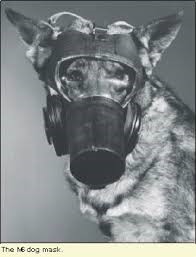
Horses
would also be given gas masks. The
British and German’s adapted a feeding bag for horses with a 14inch
flannelette
and cheesecloth bag attached to the horse’s head. The outside of the
bag would
be laced with gas retardant chemicals. Sadly for some horses they would
chew
through their bag after mistaking it for feed and therefore the
protection was
lost.
* Any
gas veil or mask required the user to see
out by using the circular lenses fitted. Back in war-time there were
few
options for the material so the lenses were made from glass, mica or
cellulose
acetate. In the heat of battle the lenses would crack or break and
would
constantly need replacing. *
One
of the best detector of gas attack was
the humble garden slug, they proved to be a great asset to the Allies
during
WW1. They proved to be extremely sensitive at detecting poison gas,
detecting 1
part of mustard gas in 10-12 million, which allowed time for the men to
react
to the incoming attack and don their gas masks. The slugs had a method
of
shutting off their breathing when the gas struck, this meant they
survived
intact and could be reused for future use. The slugs were kept on the
Front
Line in shoeboxes with wetted sponges inside.
“I haven’t got the heart to tell Grace that the slugs who
are munching her Hosta Plants are related to war hero’s”!
In
the British ranks the carrier pigeons were
homed quite far from the Front lines so they were kept relatively safe
from gas
attacks. On the German side the carrier pigeons were housed in the
actual
trenches in large steel lofts. It was found that, on the whole the
birds were
resistant to all but the deadliest of gas in strong concentrations.
* 3%
of
all gas casualties died immediately, hundreds of thousands of
ex-soldiers
continued to suffer for years after the war. *
________________
Deutsch-Sudwestafrika
or German South-West
Africa was a colony of the German Empire from 1884-1915. The South-West
Africa
campaign was the conquest and occupation of South-West Africa in 1915
by forces
from the Union of South Africa, acting on behalf of the British
government.
Today this country is known as Namibia.
THE
SINKING OF THE LUSITANIA
During
the 2nd year of WW1 German
U-boats operating from the ports of Kiel,
Bremerhaven and Heligoland. They were responsible for
sinking millions
of tons of Allied shipping, especially in the Atlantic. Across the
Atlantic the
US government was maintaining its policy of neutrality. That neutrality
would
be strongly contested on May 7th 1915. As far as
the German Embassy
in Washington was concerned the rules of engagement for naval action
were
perfectly clear. Vessels flying the flag of Britain, or any of her
allies, were
liable to destruction in the zone of war, including that of the waters
adjacent
to the British Isles.
The
31,500-ton British passenger liner The
Lusitania was one such vessel which was making the crossing from New
York
Harbour to Liverpool with close to 2,000
passengers and crew. Reports of increased German U-boat
activity in the Southern coast of Ireland, prompted the British
Admiralty to
wire the Lusitania to adopt “zig-zagging” manoeuvres and other evasive
actions.
The warning had gone unheeded and U-boat Captain Walter Schwieger
ordered a
torpedo to be fired from U-20. The torpedo exploded amidships on the
liners
starboard side, followed by a heavier explosion in the engine room
boilers.
Only
20 minutes later the ship sank with 1,198
passengers perishing, including 128
US citizens, some of which were personally known
by US President Theodore Roosevelt. The RMS Lusitania sank
approximately
11miles (18km) off the old head of Kinsale on Ireland’s south coast.
The Naval
Station at Queenstown received the Lusitania’s distress call and sent
all
available tugs and trawlers to the scene including the motorless RNLI
Lifeboat
the James Steven No 20. Despite the grim sight they managed to pull
survivors
from the water and one of the Lusitania’s lifeboats to safety. A
further 12
volunteers from Courtmacherry launched their own boat the Kezia Gwilt,
sadly
the conditions were too calm to use the boats sails so they had to row
the
entire 12 miles. By the time they arrived it was now a body recovering
exercise
however their efforts assured that many more victims
received a decent
burial and many families now had a place to mourn.
WAR
TIME RAIL CRASH
On
SAT 22nd MAY 1915 a Liverpool bound troop train
carrying half the 7th Leith Battalion of the
Scots Regiment
collided head on with a passenger train. The crash happened near Gretna
Green
at Quintinshill just over the Scottish border. Five separate trains
were
involved and it was reckoned that 227
people
died. Two signalmen were blamed with
one
being sentenced to jail for culpable homicide for 3 years whilst the
other was
jailed for 18 months.
THE
BATTLE OF LOOS
The
Battle of Loos took place in France on
the Western Front from 25th September – 8th
October 1915.
The British lost many men to German machine gun fire as they attacked
positions
around Loos without the aid of artillery support. (Shells were no
good). The
British suffered 50,000
casualties
with the Germans around 25,000
casualties.
This was the biggest attack of 1915 and the first time the British used
poison
gas. It was for his actions at the battle of Loos that Piper Daniel
Laidlaw won
the Victoria Cross.
During
the worst of the bombardment, Piper
Laidlaw, seeing that his company had been badly shaken from the effects
of blown-back-gas,
with absolute coolness and disregard of danger he mounted the parapet.
He then
marched up and down and played the company out of the Trench. He
marched alone
into no-man’s-land playing Blue Bonnets Over the Border. Daniel never
stopped
playing until the position was won despite becoming injured.
________________
The
Royal Leicestershire Regiment in WW1
fielded 19 Battalions fighting in all theatres of war from France –
Mesopotamia.
The regiment won 3 Victoria Crosses and earned 37 Battle Honours.
EDITH
CAVELL
Edith
Cavell was a British nurse that was
born in the village of Swardeston, Norfolk in England. She became a
nurse in
1895 and matron of the Berkendael Institute of Brussels in 1907. During
the
early part of the First World War she tended to friend and foe alike
however
she was arrested for her role in an underground movement that helped
200 Allied
soldiers escape from Belgium to neutral Holland where they could then
return to
active duty.
It
was at the hospital that the departing men
received money and guides from Belgian Philippe Baucq who was sentenced
with
nurse Cavell. Cavell had confessed to providing shelter for escapees at
the
hospital, they were both given the death sentence. Edith and Pierre
were to be shot
by firing squad on 12th OCT 1915. Efforts were
made by the neutral
Spanish and American ambassadors in Brussels but to no avail.
Even
in her last days her goodness and
kindness shown through in a letter that she wrote home she said, “ I am
proud
to die for my country but I realise patriotism is not enough. I must
have no
hatred or bitterness towards anyone”. These famous words can be seen on the plinth
of her statue in
London. When she was being led to the firing squad she was reciting the
words
of the popular hymn Abide with Me. When her body was released by the
German
authorities she was given a Memorial Service in Westminster Abbey
before her
burial in her native Norfolk.
* In
admiration and respect for Edith Cavell
many new- born girls were given the Christian name Edith, including one
of the
most haunting and powerful singers of the 20th
Century, French-women
Edith Piaf born 15th DEC 1915. *
THE
WOMEN’S INSTITUTE
The
Women’s Institute was originally brought
into existence to
revitalise rural
communities and encourage women to become more involved in producing
food
during the First World War. In the summer of 1915 the first Women’s
Institute
meeting took place in a garden shed in Anglesey, Wales. By the end of
WW1 the
Woman’s Institute had helped raise Britain’s food self-sufficiency from
35%
to over 60%
by
1918. The government viewed their contribution as vital, and at the end
of the
hostilities the Women’s Institute was awarded an annual grant of
£10,000.
*Britain’s
Jockey Club decided to continue racing, but at a reduced level /
schedule. The Grand National race took place on March 26th
1915 the
77th in its history. The National was won by
legendary jockey Jack
Anthony winning his second of three Grand Nationals. *
ELSIE
INGLIS AND THE GREY PARTRIDGES
During
WW1 the Scottish
Women’s Hospitals provided care and
support to thousands of soldiers, an action that only a few years
earlier would
have been considered unbelievable.
Elsie
was born in 1864 , her parents nurtured
her intent in medicine, and she became one of Scotland’s first female doctors
qualifying in 1892. She
obtained a post in at the New Hospital for Women in London as well as a
position at the Rotunda in Dublin, a leading maternity hospital. When
she
arrived home she expressed a desire to work with the sick and injured
of WW1
but she was not taken seriously by the Medical establishment.
Non–the-less she
began work in Calais helping Belgian soldiers. A little later she was
now
heading for the S.E. Front where she would spend the most time with her
beloved
Serbians.
The
ever-growing need for medical support
across Europe quickly saw numbers increase. Over time Elsie Inglis and
the
Partridges were responsible for setting up an incredible 17 hospitals.
This
would include bases in France, Serbia, Russia, Greece, Romania,
Corsica, and
Macedonia. With the exception of France their work was all on the
South-East
Front, The Balkans. On top of this, satellite hospitals and dressing
stations
were set up in other locations affected by the war in both Western and
Eastern
Fronts.
After
Russia’s war involvement ended in 1917,
tens of thousands of Serbs faced certain death. Elsie herself was taken
Prisoner-of-War but she managed to convince both sides that she would
supply
medical care to them all with the hope of a reduction in fighting.
Among her
many battles Elsie was fighting a battle of her own, she had cancer.
Her
condition worsened
and within a short
time back home Elsie died.
Of
the 1,500 personnel that served the
Scottish Women’s Hospitals only 20 were men. The women carried out
tasks as
Doctors, Surgeons, Ambulance Drivers, Orderlies, cooks, and even grave
diggers.
THE
PARTRIDGES
The
Grey Partridges were given their name due
to the grey overcoats they wore. There contingent was made up of
Trained Doctors,
Nurses, Scottish Woman’s Ambulance Core and General Workers. The women
provided
help to soldiers on the Romanian Front in the most difficult days of
WW1. They
finally reached Romania via a long and arduous voyage through the
Baltic Sea
with a strong risk of being torpedoed. They set up a hospital at
Medgidia
treating the wounded in terrible conditions under bombardment and in
retreat as
the Front collapsed. They also managed to convert an abandoned building
in the
city of Galati into at operational hospital.
* Death
through disease was even greater on the
Eastern Front than the Western Front. The biggest problems being
Malaria,
Cholera, Dysentery and also Typhoid Spotted Fever, transmitted by lice.
*
The
women were spread out between Greece,
Serbia, Salonika, Romania on the South (Balkan) Front.
Another
group that was doing their best to
help on the island of Salonika was some hardy Australian women,
marshalled by
Agnes Bennett also on a mission of mercy .They would have to be careful
as the
island was full of spies.
* Flora
Sandes from Yorkshire (GB) was believed
to be the only British woman serving on the front lines when she
arrived in
Serbia during WW1. *
During
October 1915 BULGARIA entered the war
on the side of the Central Powers.
On
9th October 1915, BELGRADE in
SERBIA surrenders to the Central Powers.
On
the Eastern and South-Eastern Front the
Central Powers also occupied Poland and most of Lithuania, with Serbia
being
invaded.
______________
One
of several British ships sunk around this
time was the British Hospital ship “Anglia” which was sunk by a mine
off Dover
on 17th November 1915. The ship was returning
from Calais to Dover
carrying 390 wounded officers, a mine exploded close to Folkestone with
134
men lost. DURING WW1 A TOTAL OF 26 ALLIED
HOSPITAL SHIPS WERE SUNK.
______________
“If
the war was not bad enough, the men at
the front had to deal with the possibility of catching many diseases
that were
going around. With their reduced resistance to disease many fell prey
to illnesses
that spread like wildfire through the trenches.”
TRENCH
FEVER
In
1915 a British Medical Officer on the
Western Front reported on a soldier who was suffering from a relapsing
fever,
dizziness, lumbago, and shin pain. Within months more cases were
described,
mostly in frontline troops, and the new disease was called Trench
Fever. More
than a million troops became infected with the Fever during WW1, with
each
effected soldier unfit for duty for more than 60 days. It would take a
further
3 years before it was realised the condition was caused by lice.
No
one in the Trenches could escape the lice,
some men shaved their hair and body-hair but the lice were still living
in
their clothing. Even after their clothing was washed, the eggs of the
lice that
lay in the seams of the clothes would survive and re-infect the
soldiers.
*The
term “CHATTING” was a word used by
soldiers to describe the killing of lice by crushing them between the
fingernails. *
TRENCH
MOUTH
Trench
Mouth would cause “crater-like” ulcers
between the teeth, a grey film of dead flesh and skin that would build
up in
the mouth. The condition was an extremely painful form of Gingivitis
where the
gums became red, very swollen and bleeding, also accompanied by mouth
ulcers.
The problem stemmed from the Soldiers at the front being “run down”
from poor
nutrition, bad oral hygiene, smoking and stress. The habit in wartime
of
smoking cigarettes “hands free” also contributed
to the problem. When the Trench was busy the
cigarette in their mouths would burn down, often oblivious to the
soldier. In
the heat of the moment the cigarette was the last thing to worry about.
* One
makeshift cure for Trench Mouth that
became popular in the Trenches was to smear your mouth and gums with
butter and
then chew on a large spoonful of sugar. The abrasive action of the
sugar would
help scrape the dead skin and flesh away! *
TRENCH
FOOT
Once
again this condition was brought about
by living in unsanitary surroundings. Trench Foot would start by
standing in
water for long periods, this would become worse when the water was
cold, thick,
and muddy. The soldier’s foot /feet would begin to get numb and turn
red or
blue, if caught in time the foot could be treated in a Field Hospital
for 5
days and the soldier could return to duty. Sadly if the foot was left
too long,
there would be an aroma of rotting flesh which allowed Gangrene to “set
in”,
requiring the foot to be amputated.
TUBERCULOSIS
In
the early part of the 20th
Century Tuberculosis or TB was a deadly scourge on the population, much
like
Cancer is today. In Victorian times it was known as “consumption!” as
the
disease slowly consumed the lungs. In the poor crowded and damp
conditions of
the WW1 Trenches the disease spread easily. TB was the leading cause of
discharge accounting for 13% of all British servicemen at the Front.
The flow
of casualties was soon to overwhelm the existing British medical
facilities
including pre-war mental asylums.
There
was no effective drug treatment for TB
until after WW2. The early 20th Century
hospitals or sanatoriums
advocated plenty rest and fresh air as a means of slowing the disease
down, on
some occasions the men would be cured. Working class families living in
Britain
were particularly susceptible to the disease as they tended to have
large
families living in cramped and often cold damp homes. The Factories Act
of the
Early 20th Century forbade the spitting in the
workplace as the
bloody sputum was known to spread the disease, sadly in the WW1
Trenches these
rules would be impossible to halt /control the spread of TB.
DYSENTERY
Dysentery
was caused by a lack of sanitation
in the Trenches and an irregular supply of clean drinking water.
Soldiers would
sometimes have to rely on melted snow or water from shell-holes, this
unsanitary water caused bacterial infections of the intestines,
diarrhoea,
fever, vomiting and stomach aches. Best cure available was eating
onions in the
form of a soup, which could kill the bacteria in some cases. However
many men
in this dehydrated state would often die. Garlic was also popular for
dysentery
and infected wounds.
TETANUS
Tetanus
is a dangerous bacteria that you can pick
up through a cut or wound from soil, dust or manure. The manured fields
of
Belgium and Northern France made it a disaster waiting to happen. You
could
also get the infection from
deep
punctures or wounds by nails or knives however you could also get
infected from
a simple scratch from an infected piece of material such as wood. When
the
bacteria had invaded the body, it produces a poison “toxin” and causes
painful
muscle contractions. Another name for Tetanus is “Lockjaw” causing the person’s neck and jaw muscles to
lock, making it
difficult to open the mouth and swallow. Without treatment Tetanus can
be fatal.
WEIL’S
DISEASE
An
infectious disease commonly carried by rodent’s
urine also known as Leptospirosis. People bathing in canals or stagnant
fresh-water
pools such as those seen in or around the Trenches may be affected by
the
organism penetrating the skin through cuts or abrasions. Can cause
muscle pain
and jaundice, the condition carries a 20% mortality rate. (That’s why
pets must
be vaccinated against Leptospirosis.)
THE
SPANISH FLU PANDEMIC
The
1918 the Flu Pandemic was an unusually
deadly strain of influenza, it spread to over 500
Million people
across the world killing 100
Million.
The reason
it was called Spanish flu was because of one high-profile casualty, the
gravely
ill King of Spain. In truth the countries of Germany, Great Britain,
France,
and the U.S.A, all had similar mortality rates as Spain but they were
censored
to prevent the
damage to their own
nations morale and to prevent giving the enemy a morale boost.
The
flu took hold in Europe due to the
weakened immune system of men all living in close proximity in the
Trenches
with unhygienic living conditions. The sad irony was that many men
suffered and
survived the years of the war on the Western Front only to be killed by
the
Spanish Flu.
Over
2
Million
men died from disease and infections caught in WW1
Trenches.
SHELL
SHOCK
During
WW1 the British Army dealt with 80,000
cases of shell-shock, some 16,000
victims came from the battle of the Somme.
Low ranking officers suffered some of the worst symptoms because they
were
called on to suppress their emotions to set an example to their men.
Before a
big battle the men who could “switch off” their negative thoughts had a
great
advantage, however those who ruminated on all the negative outcomes
could find
themselves in greater danger of Shell-shock. The victims of Shell Shock
found
themselves unable to eat or drink sometimes suffering deafness,
blindness with
some becoming mute or paralysed, many were shaking uncontrollably with
others
displaying facial tics.
Many
were wrongly executed by the British
Army as cowards and their families have borne the brunt off the stigma
and
injustice to this very day. In WW1 the standard treatment for
shell-shock,
according to the Army Medical Officers was, Solitary Confinement,
Emotional
Deprivation, Shaming and Physical Re-Education. In the years following,
the men
would try different therapies that allowed the brain to heal from its
trauma,
even knitting, along with care and attention. For some it worked but
for others
they remained locked in a world of fear.
Although it was said that
the executions
stopped earlier in the war the truth was that the executions by firing
squad
continued later in the war but were carried out quieter, without the
official documentation
of earlier years. It was due to the suffering of all the Shell-shock
victims
that the “lid was lifted” on P.T.S.D or Post Traumatic Stress Disorder
in
future conflicts. The Shell-shocked victims of WW1 were only one set of
casualties
there were also countless men who were psychologically wounded in many
different ways.
PARROTS
ON THE EIFFEL TOWER
In
1915 parrots were kept at the top of the
Eiffel Tower so their remarkable hearing could warn of any enemy
aircrafts
approaching. They would squawk at this new sound of aeroplane engines.
The
birds served valiantly but the programme
was later discontinued when the parrots were unable to learn the
difference
between German and Allied aeroplanes.
(you
need a WW2 blitz cat for
that job or Freda the Duck)
THE
PICKELHAUBE
This
helmet was used by German troops during
the first two years of WW1. It is made mainly of leather with a metal
spike on
top and a brass emblem at the front. It was originally introduced for
the
Prussian Infantry in 1842. The helmet gained popularity and, it was
used by the
military police forces in Mexico, South America and Scandinavia and
even
inspired the shape of the British Police helmet.
The
helmet was phased out in 1916 when
leather became scarce. The main source of leather came from South
America and
was now blockaded by the British. At this time Germany decided to
produce a heavier
more protective steel helmet, (the Stahlhelm) not unlike the ones
Germany used
in WW11. Since the introduction of the steel helmets head wounds
dropped by 70%.
The spike at the top of the older helmets
were designed to deflect a sword / sabre blow to the head in the days
of
Prussian cavalry charges and hand to hand fighting.

X-
RAY MACHINE
Physicist
Wilhelm Rontgen discovered X-Rays
in 1995 at the University of Wurzburg, Bavaria. He wished no reward or
financial
gain for this invention so that it could be used for everyone requiring
it. Due
to his generosity the red tape and costs were done away with, so the
X-Ray
machines were up and running by 1915 in the Tent Hospitals of the
Western
Front.
The
X-Ray’s allowed for the exploration of
the internal body without having to resort to surgery first. The X-Ray
machines
at the Front were used mainly to detect Shot Gun wounds, Shrapnel
wounds or
Broken Bones.
WAR
IN THE MOUNTAINS
In
1912 Italy, Germany, and Austria/Hungary, renewed their Triple Alliance
for a
further 6 years but all wasn’t well with the Alliance. Germany was
“currying
favour” with the Turks (The Ottoman Empire) as a potential partner
during WW1 to
fight the Central Empire’s cause in the Middle Eastern region. In 1911
it was
believed that Italians in Libya were being mistreated by units of the
Turkish
Forces, it was also believed that German Forces were singing
anti-Italian
songs. Italy decided to remain neutral during WW1. As time moved on the
Allies
wanted Italy’s participation because of its border with Austria. There
was a
strong sentiment in Italy to go to war with the Austrians within the
general
public and the political classes. Italy was promised Trieste, Southern
Tyrol,
Northern Dalmatia in return for a pledge to enter the war on the Allies
side.
The
Treaty of London was signed on 26th
April 1915 and was to see Italy going to war along-side the Triple
Entente
(Allies). Italy declared war against the dual Empire of Austria /
Hungary on 23rd
May 1915. When Italy declares war on Austria / Hungary it opened up a
new front
in WW1 stretching 600km, mostly mountainous, known as the (White War).
WHY
GO TO WAR
OVER A MOUNTAIN RANGE ?
The
mountain range was the natural border
between Italy and Austria. If the Austrians crossed the border they
could find
themselves in the Lombardy region or North Italy. If this area fell to
the
Austrians, Italy would have lost the country’s main industrial and
economic centre
including the main city of Milan. Likewise the Austrians were very wary
of the
Italians coming over the mountains and taking possession of the
important Tyrol
region of Austria. A decision was made to close the Mountain Passes at
both
ends which left this conflict as yet another war of attrition.
From
1915-1918 over 60% of
all that died on the mountains were
victims of the elements, Avalanches, Frostbite, Landslides, Cold and
Exhaustion.
Only 30% were the victims of direct military action. Winter temperature
would drop to -40 Degrees
Celsius.
Avalanches
in 1916 killed over 10,000 Italian and Austrian troops in just 2 days.
The
supply lines were to include the use of many ropeways to reach the
troops at
the higher altitudes. All manner of artillery had to be dragged up the
mountain. Mules, Dogs and Men would have to pull the heavy artillery
and
munitions.
The St
Bernard dog was a considerable asset on both sides of the conflict.
These dogs
were named after the Monastery of Saint Bernard in Switzerland. They
were
trained by monks over 1,000 years ago to track down anyone lost in the
mountains and with a loud howl they would let known their location.
They would
also carry food and a small barrel of brandy around their neck to help
revive
their casualty. They are also the heaviest breed of dog at 220lb or
100kg which
made them useful in the mountain war for pulling sledges of supplies up
the
mountain.
The
fighting took place in a zone above 2,000
ft ,
at high
altitude, avalanches was a big problem and the men would have to
continually
dig snow. The winters of 1916 and 1917 brought the heaviest snows of
the
century.
WELL
KNOWN FACES
GUGLIELMO
MARCONI was an Italian electrical
engineer who won the Nobel Prize for Physics in 1909 for his work on
the
transmission and reception of Radio Waves. Marconi served in the
Italian Armed
Forces and directed his countries radio service. He began experiments
with
Short-Wave radio and Narrow-Beam transmission, making detection by the
enemy
much harder.
ENZO
FERRARI was a Motor Racing Driver and an
Entrepreneur, the founder of the Ferrari Motor Racing Team.
Meanwhile
across the mountains fighting for
the Austrian / Hungarian side was a young officer called ERWIN ROMMEL.
He would
go on to become known as the Desert Fox and was respected by friend and
foe
alike.
By
late 1917 much needed reinforcements were
to arrive on the mountains from the British, French, and German side.
It has
been estimated that 600,000
Italians and
400,000
Austrians,
were to die on the Italian Front.
* The
PASUBIO OSSUARY is a stone tower that holds
the remains of Italian and Austrian soldiers who had fought in the
mountains
during WW1. Valli del Pasubio is a town in the province of Vicenza,
Veneto,
Italy. *
As
the weather becomes milder an amazing
sight has been witnessed on Mt Scorlozzo. Caves made by the Austrians
at 3,000
ft used as shelter from the elements. The caves were made for 20 men
and came
to light as the climate becomes milder. This cave was found in 2017 but
it is
believed there could be many more shelters on the mountains.
__________________
On
the 30th December 1915 the
British Cruiser (Natal) exploded with the loss of 405
lives. It is believed that there was no
enemy involvement but may have been caused by an exploded magazine. The
Cromarty Firth was used in both World Wars as a large, long, and
deep-water
anchorage. The town of Invergordon was of vital importance with its
large fuel
depot and repair base for the British Fleet. The once quiet town of
Invergordon
changed overnight with the influx of thousands of Naval and Army
personnel. The
remains of the crew of the Natal explosion were buried in a near-by
Gaelic
Cemetery.
POPULAR
EARLY MOVIES FROM 1915
THE
BIRTH OF A NATION :
(USA)
LES
VAMPIRES : (FRANCE)
THE
CHEAT : By Cecil B
DeMille, (USA)
POPULAR
BOOK FROM 1915
THE
39 STEPS : by John
Buchan G.B.
***************WILFRED
OWEN***************
Wilfred
Owen (1893 – 1918) was a British
Soldier and Poet from WW1. He was born near Oswestry in Shropshire and
was one
of the leading poets of the First World War. His war poetry told of the
horrors
of the Trenches and gas warfare which stood in contrast to the public
perception of the War at that time. He died in action crossing the
Sambre-Oise
Canal one week before the signing of the Armistice. To make matters
much worse
the Church Bells were already ringing out all over Britain for peace
when
Wilfred’s family received a telegram to say he had been killed and was
to be
buried in Northern France.
DULCE
ET DECORUM EST
“Bent
double, like old beggars under sacks, knock-kneed,
coughing like hags, we cursed through sludge,
Till
on the haunting flares we turned our backs
And
towards out distant rest
began to trudge. Men marched asleep. Many had lost their
boots, But
limped on, blood-shot. All went lame; all blind. Drunk with fatigue;
deaf even
to the hoots of gas-shells dropping softly behind.
Gas!
GAS! Quick boys! – An ecstasy of fumbling. Fitting the
clumsy helmets just in time, But someone still was yelling and
stumbling.
And
Floundering like a man on fire or lime. Dim through the
misty panes and thick green light, As under a green sea, I saw him
drowning.
In
all my dreams before my helpless sight, He plunges at me,
guttering, choking, drowning.
If
in some smothering dreams, you too could pace.
Behind
the wagon that we flung him in, And watch the white eyes
writhing in his face, His hanging face, like a devil’s sick of sin.
If
you could hear , at every jolt from the froth corrupted
lungs, obscene as cancer, bitter as the cud”.
“Of
, incurable sores on innocent tongues – My friend, you would
not tell with such high zeal. To children ardent for some desperate
glory, The
old lie : In Latin : “Dulce et decorum est Pro patria Nori or in
English, “It
is sweet and fitting to die for one’s country”
________________
“The
last few embers of 1915 had all but
burned away, what will 1916 be like? Will there be Allied breakthroughs
or
German break-throughs? What can be done with the menace below the seas
and the
menace above the clouds. No one has ever seen War-fare like it. They
call it
the War fought with 20th Century Artillery and
early 19th
Century tactics! A War of men led by donkey’s, will anything change
during this
new year. Will it really become the War to end all Wars” ?
1916
“
January 1916 would see the beginning
of
CONSCRIPTION in Great Britain.
The British Military Expedition who left for France in
1914 were all but
gone. and the early volunteers of Lord Kitchener’s recruitment drive of
over 1
million enlisted men had now dwindled away. Although the Trenches gave
some
protection there was still many battles taking place all around Belgium
and
France that took a heavy toll of casualties. There was also the heavy
loses of
the Gallipoli campaign and the constant battle with Trench diseases and
infections.
With
all that in mind Kitchener came up with
a plan to build the
British numbers up
by Conscription : which means compulsory enlistment for state service,
typically into the armed forces. This was initially for single men but
it was
extended to married men from 18 – 41years, being
raised to 51 year of age by June 1916. To
make the recruitment more palatable for many, Kitchener allowed the men
to form
their own PALS BATTALIONS.”
THE
PALS BATTALIONS
The
Pals Battalions had a lot of benefits
over recruitment into the regular Army where you may be from a
different part
of the country and don’t know anyone. The Pals Battalions would be set
up in
your hometown with people you have known for years. For mums and dads
who
wanted their son
“looked after” while in
France, they could speak to a local teacher, blacksmith, shopkeeper etc
and ask
them to keep an eye out for their young son. They will all be together
in
France so this would give the mums and dads a little
peace-of-mind.
Another advantage was if The
Pals Battalion was
formed from a common interest such as a professional or amateur
Football or
Rugby Club or any other common interest in their town, they would have
plenty
to speak about. This can be so important when time goes slowly,
especially
during those soul-destroying times in the Trenches before going “over
the top”.
The
downside of the Pals Battalions was that,
if they took heavy loses some could lose many good friends that they’ve
known
all their lives. Another disadvantage was that, if a Pals Battalion was
hit
badly, back in their hometown a whole generation could be lost
including many
teachers, tradesmen, blacksmiths, bakers, butchers etc. Lord Kitchener
had his
faults but when it came to the recruitment and training of troops there
was few
that could match him. These new Battalions were known as KITCHENER’S
ARMY.
The
very first British professional football team to form a Pals Battalion
was
Heart of Midlothian (Hearts). Initially Hearts were top of the Scottish
league
when 16 players from the 1st and 2nd team
enlisted as well as
500 supporters and ticket holders.
Some background staff were to join them. The Battalion was known as
McCrae’s
Battalion named after Colonel Sir George McCrae. The Battalion figures
were
boosted by 150 Hibs
followers and men
from Falkirk FC, East Fife FC, Dunfermline FC, and Raith Rovers FC.
Tragically
the war took the lives of 7 of the Hearts players with many others
wounded. A
memorial cairn was constructed in the village of Contalmaison on the
Somme.
THE
CONSCRIPTION RECRUITMENT DRIVE GAVE THE MILITARY 2.6
MILLION NEW
RECRUITS.
________________
During
Conscription Dundee had a female
dominated jute industry that limited male employment. This led to the
city having
one of the highest proportion of reservists and serving soldiers than
almost
any other British city.
With
the introduction of conscription in
January 1916 every region of the country was now affected. It would be
impossible to list all the Pals Battalions but, here are some that show
how
widespread they were and how they were affiliation
to larger Regiments.
16th
Glasgow, most were recruited
from ex Boys Brigade, Glasgow Boy’s Brigade Battalion.
The
17th was the Glasgow Chamber of Commerce Battalion.
Edinburgh
Royal Scots had
4 Battalions including Heart of Midlothian.
Swansea
Pals 14 Battalion of the Welsh Regiment.
Liverpool
Pals 1 – 4 Kings Liverpool Regiment.
Salford
Pals 1- 4 Lancashire Fusiliers.
Bristol’s
Own 12th Battalion Gloucestershire
Regiment.
13th
West Ham Boys Battalion Essex Regiment.
14th
Hampshire Regiment. (1st Portsmouth).
1st
and 2nd Football Battalions Middlesex
Regiment.
The
Accrington Pals Battalion.
10th
Battalion West Yorkshire.
The
Bradford Pals.
The
Cardiff Pals.
The
Birmingham Pals.
Grimsby
Chums.
If
a large number of men were lost in battle
it was common to form a new Pals Battalion from the remnants of other Battalions.
January
1916 brought about some positive news
on the war at sea with the invention and distribution of the depth
charge.
Depth charges were set to explode by means of an adjustable pressure
switch. It
was not perfect but it was a lot better than nothing. At its peak the
U-boats
were sinking almost 2 Allied ships a day. * The
first
German Submarine, the U-boat 1 entered service in 1906. *
________________
January
1916 brought about Military Tank
trials at Hatfield, Hertfordshire. Back in October 1914 an officer of
the Royal
Engineers (REME) suggested the idea of a power-driven armoured vehicle
on
caterpillar tracks to overcome the deadlock of trench fighting in WW1.
His idea
reached Winston Churchill who was already experimenting with this idea
of armoured
cars himself. As quickly as possible the design was made practical and
by 1916
the first armoured vehicle was now ready for action.
All
efforts were taken to avoid the enemy “getting
wind” of this new invention so when the Tanks were shipped over to
France the
parts were placed in huge crates marked Tanks (as in water tanks) to be
constructed a bit like a flat-pack. (A pussycat would need to
“pump a lot of iron” to have it away with the contents of this
flat-pack) Anyway,
the Tanks were assembled and were
known as male or female tanks. Male tanks had cannons whilst female
tanks had
heavy machine guns. The machine guns were manufactured in Newcastle.
THE
BATTLE OF VERDUN
On
February 21st 1916 the battle
of Verdun began which would last until December the 18th . Verdun was a
haemorrhaging
of men and spirit
the likes had never
been seen before. The battle began with a furious bombardment by 1,220
German
guns on a narrow 8 mile (13km) front. This section of the Western Front
turned
into a “mincing machine” as artillery inflicted slaughter on an
industrial
scale. German losses would soon match those of the French.
France
funnelled in Fresh troops and supplies
and appointed a skilled defensive commander, Petain. In the Autumn,
after
pressure had been removed from Verdun by the mainly British offensive
on the
Somme, French counterattacks retook almost all the ground lost to the
Germans.
The German plan had failed but the debilitating experience of Verdun created widespread mutinies in the French
army in 1917.
* If
you feel you have been unlucky in life,
then take a look at one German Soldier that lived through the whole of
the
Battle of Verdun only to be called up in WW11 where he ended up
enduring the
Battle of Stalingrad! *
__________________
In
April 1916 a German Battlecruiser Squadron
bombarded the costal ports of Great Yarmouth and Lowestoft. The Germans
main
aim was to entice out to
sea the British
defending ships. They had hoped to “pick off” the British Ships using a German Battle
Cruiser Squadron
however the British had “second guessed” the tactic.
THE
BATTLE OF JUTLAND
The
Battle of Jutland was the only major sea
battle of WW1. The British Fleet under Admiral John Jellico was led
from Scapa
Flow and intercepted the German High Seas Fleet off the West coast of
Jutland
(Denmark). Although the battle was inconclusive and although the
Germans had
the edge over the British,
the German
naval chiefs withdrew their fleet back to port and turned instead to
unrestricted
submarine warfare as a means of challenging the British at sea.
For
the last 20 years the German Empire had
challenged the British command of the oceans, and in particular the
North Sea
by the building of the new Dreadnought battleships that would dominate
the
world’s Navy’s. The Dreadnoughts had heavy calibre guns and steam
turbine
propulsion however the British had also been building state-of-the-art
ships.
Like many state-off -the-art weaponry that came before, the Dreadnought
quickly
became obsolete with the development of aircrafts and aircraft carriers.
* Of
the 150 ships of the British Fleet that
fought at Jutland, no fewer than 63 were constructed in shipyards on
the Clyde.
*
In WW1
Belfast’s Harland and Wolff shipyards, built Monitors and Cruisers
including
the 15 inch gun armed large-light-Cruiser. The yard specialised in
mass-produced ships of standard design developed for the First World
War.
For the young
and not quite so young, (A Ships
Cat Tale from WW1)
“
In a time long ago in a land far away there were 3 crofter cats that
were
“drafted” into the Royal Navy at a time of unrest all over Europe. The
cats
were placed onboard the biggest ship in the Royal Navy HMS The Salty
Hammock.
The oldest cat was known as Senior Ships Cat “Haggis” and he was
responsible
for Rodent Control on The Top deck. His younger brother Able Sea/cat 1st
Class “Neeps” was responsible for patrolling the mid deck and, as it
was such a
big ship the youngest brother Able Sea/cat 1st Class “Tatties”
patrolled the
lower deck.
The
cats all settled into their different
roles but in 1916 the ship was ordered to engage the enemy of the
Danish coast.
The cats were all very nervous as the ship steamed towards the battle
zone.
After a brief silence all hell opened up. You could hear loud bangs,
deep
rumbling noises, the screeching of metal. Neeps and Tatties were very
nervous
and frightened so “Haggis” told them to go to down to the galley where
there
was a door with a cat flap. Go inside and you’ll both get help for your
anxiety. Quickly now!
The
cats found the door which said in blue writing (Stress Management For
Cats)
They entered the Cat-flap and found an Emergency ball of wool and Cat-nip. Not long after
they were rolling
around in the bits of catnip like children rolling around in newly cut
grass.
They then started to drool like a person with a numb mouth trying to
hold a
conversation with the dentist. They then put their paws on each-
other’s
shoulders and in Cat language they exclaimed “I LOVE
YOU MAN” They
started
playing with the ball of wool but only slowly, a bit like the Tennis
computer
game from the mid-seventies.
Then
there was a very loud thud
and explosion
coming from near the bow. At first “neeps” thought it was due to the
strong
catnip but alas no. Engineers were mustered to the damaged area and quickly
“Battened down the hatches to
prevent sea water from spreading throughout the ship and closed off all
valves.
As no one had renewed their 10,000 metre breaststroke certificate it
would be
best to head home immediately. However they were not out of the woods
yet as
the ship was listing badly. One of the officers fed “Haggis” and set
his bowl
on the deck, sadly the list of the ship caused the food and bowl to
slide along
the deck and fall into the sea. “Haggis” wouldn’t have minded so much
but it
happened to be his favourite, (Kitty Chunks in a Rich Gravy!) As they
made
their way back the wind was much stronger. Haggis felt there was little
pleasure in trying to puke up a fur-ball in a force ten gale, “these
young cats
nowadays they don’t know their born”! said Haggis.
Also
enlisted along with the cats was Able Ships dog Blossom the Beagle also
known
as “Blameless Blossom”. She was enlisted to “take care” of the larger
rodents
aboard the ship and, also to check for any men pilfering from the
galley.
Blossom’s job was to get rid of the larger rodents, she would kick them
overboard with her big “muckle paw”. It was later found that many shell
pies
had gone missing. As the battle heated up Blossom was busy decanting
Pies from
the Galley to Lifeboat No3. She crawled inside and threw the tarpaulin
over the
lifeboat with her teeth. She checked her pie stash and decided to
perhaps have a
small nibble of a pie later. A cry went up on the decks, we can’t find
Blossom!
She is missing presumed fed.

The
next day whilst the ship was in dry dock a sailor heard snoring noises
coming
from Lifeboat No3. In closer inspection as he lifted the tarpaulin he
found
Blossom the Beagle surrounded by half-eaten pie crusts. Sometime later
“Blameless Blossom” was to be given a dishonourable discharge from the
Navy.
Charge 1( Dereliction of duty whilst the crew were at Battle Stations.)
Charge
2 ( Wanton destruction of Royal Navy
Pie Crusts)
In
her defence she said the pie crusts made her gums bleed.
Blosson,
Haggis, Neeps and Tatties were all returning to their mum and dad and
the Croft
they missed so much. They all fell asleep by the warmth of the fire.
Haggis
started to mumble in his sleep, “Cats nowadays they don’t know their
born”!
Blossom started to dream of a time yet to come. There were 7 little
Puppies
that helped everyone and saved the day with strange gadgets. Blossom
wondered
if she could get a part-time job as Sea Dog 1st
Class aboard Captain
Tarbit’s Boat!
WE CAN DREAM
THE END
VISCOUNT
KITCHENER
The
long and distinguished military career of
Herbert Kitchener was abruptly brought to an end when the SS Hampshire
hit a
German mine and sank off Marwick Head just off the west coast of
Orkney. He was
travelling to Russia to have talks with Tsar Nicholas II. Only 12
people
survived the sinking of the ship in June 1916. A monument was erected
and paid
for by the people of Orkney at Marwick Head. He was best remembered for
his
poster recruitment and training volunteers to a high professional
standard
during the 1916 subscription, (Pals Battalions) known as Kitchener’s
Army.
__________________
*Despite
farming being a reserved occupation during WW1, more than 170,000
farmers
fought in the Trenches and up to half a million farm horses were
requisitioned
by the War Office to help on the Front Lines. *
THE
BATTLE OF THE SOMME
“
It’s impossible to talk about the battle of
the Somme without bringing to mind the whole of WW1 and its sheer waste
of men.
Perhaps what made the Battle of the Somme worse was because it was
fought on a
larger scale. It was not one battle but a series of overlapping large
battles
that only finished in November due to the rain and boggy underfoot
conditions.”
JULY
1st 1916 : Along the Allied
Trenches there were 13 British Divisions North of the Somme river and
11
Divisions of the French 6th Army astride the
south of the river, The
French army contained many soldiers from North Africa. The Somme
offensive was
conceived as a counter-attack intended to breach the lines of the
German Army
which had occupied Northern France since 1914.
* During
WW1 engineers along the Western Front
would cut down trees in the night and replace them with prefabricated
observation points. These observation points had been decorated as
highly
detailed replica trees. *
The
Allies that day were made up from English
Battalions and Pals Battalions, Scots Battalions included The Seaforth Highlanders and
Sutherland and
Argyll Highlanders and Welsh Regiments. There were also Ulster
Regiments and Nationalist
Regiments from Southern Ireland. There were many Indian Soldiers,130,000
in
total
which included men from what is now Pakistan, Bangladesh, and Sri
Lanka. They
served along-side the ANZAC’s and there was no shortage of Canadians
including a
Newfoundland Regiment, South Africans, and Rhodesians.
Also
part of the British Army had its ranks swollen by 100,000
Gurkha’s who
fought in many theatres of WW1, winning 100’s
of Gallantry medals as well as 3
Victoria Crosses. The barraging of the
German Lines had stopped with an eerie silence. The time to attack was
close
with all the Trench ladders put in place. The word was given to all the
pipers
to make their way onto no-mans-land with the different regiments
playing their
own march. It was now time to blow the whistles to get the men “over
the top”.
The
Royal Scots – (Dumbarton’s Drums)
Kings
Own Scottish Borders – (The Blue
Bonnets)
Royal
Highland Fusiliers – (Highland Laddie)
Cameronian’s
(Scottish Rifles) Athol
Highlanders Gathering of the Grahams.
Other
popular songs were (Scotland the Brave)
and (The Black
Bear).
As
the pipers began marching across
no-mans-land all the men would follow. Sadly the death rate among
pipers was
very high as they were seen by the enemy as a “modern day flag bearer”
However
the sound of the pipes on a battlefield stirs the Scots up both
mentally and
physically. Many pipers were awarded for their bravery and some
received the
Victoria Cross while others received the French Award of the Criox de
Guerre.
* Not
all Pipers belonged to Scottish Regiments. Many of the Allied Countries
were
marched into battle by Pipers. *
Many
men were “cut down” from machine gun
fire from the German MG08 machine guns. Survivors of the Somme include
C.S.
Lewis, author of (Chronicles of Narnia), J.R.R. Tolkien author of (Lord of the Rings) and his
son. On the French
side there was composer Maurice Ravel (Bolero) an ambulance and truck
driver. The
German’s had set up their machine guns in a way that there were no safe
or
“blind” areas on the battlefield because the firing from the German
Machine guns
overlapped the entire battlefield. During the course of WW1 100
Battalions had approximately 2,500
Pipers. 500
Pipers were killed and 600 wounded.
After a battle the Piper would return to play a Scottish lament for
those dead
of the Battalion. Usually a pipe tune called the “Flowers Of The
Forest”.
( Lament for the dead : “according
to tradition the bagpipes are the only musical instrument that can be
heard in
Heaven. The piper helps to direct departed souls towards Heaven’s Gate.
The
piper then walks away, this symbolizes that the Piper leading the
departed has
stopped short of the gate through which he cannot pass. This is why
some pipers
at funerals, after they stop playing, turn their back and keep a
distance from
the procession”.)
The
Bugle
which was more associated with English Regiments especially Cavalry
Regiments
is used on the battlefield to give directions or to signal. The Bugle
would
relay instructions from officers to soldiers during battle. This could
mean
Signalling, ADVANCE,
ATTACK, CHARGE and
RETREAT as well as for MUSTERING the troops. Cavalry would have played
a bigger
part in WW1 if not for the rain and boggy conditions.
During
the opening period of the Battle of the Somme the men from the 10th
Battalion West Yorkshire would suffer the highest first day casualties.
The
Bradford Pals of over 2,000
men lost
nearly 1,400
that went
over the top. The fate of the Accrington Pals very clearly shows the
downside
of the Pals Battalions. 720
men of which
584
were killed,
wounded, or missing. Few if any of the town’s population had been
untouched by
the tragedy. There was not a street in Accrington and District that did
not
have their blinds drawn, and the bells at Christchurch tolled all day
despite
restrictions on the use of church bells.
(In
1916 Romania join the side of the
Allies.)
TELEGRAMS
Telegrams
were also known as Wires or Cables.
They were expensive to send which meant that the messages were brief.
War
Telegrams would always start with “We regret to inform you”. The
Telegrams were delivered by boys of 14 years of age. In 1914 the Post
Office
employed over 250,000 people, the largest single employer of labour in
the
world. In August 1914 11,000 Postal Staff enlisted and by December that
figure
rose to 28,000 staff.
The
Post Office had its own Battalion known
as the Post Office Rifles which took heavy casualties at Ypres and the
Somme.
This next true story happened in Nottingham during the 2nd
World
War. One man remembered delivering 3 Telegrams in Nottingham to the one
home.
The first said, “your son is missing”. The second
letter had the
incorrect news that said, “your son had died”. The 3rd Telegram said, “he was
actually in a prisoner
of War camp” (“Talk
about playing with your emotions!”)
One
man from the 36th
Ulster
Division described the machine gun fire as like “a fine shower of
hail”. It
became a one-sided carnage which gave birth to the expression “the
Germans were
crying into their machine guns”. Another expression that took root
around this
time was “Lions led by Donkeys” a reference to the ineptitude of the
British
High Command under Douglas Haig. Some men from the 36th Ulster received
Victoria Cross that day some awards would be posthumous. On the first
of July
the 36th Ulster Division were tasked with
attacking and capturing
the German positions to the east of Ancre, including the Schwaben.
The 16th
Irish Division (South of Ireland) would receive great praise for
capturing the
German held village of Ginchy, depriving the Germans of observation
posts from
where they could observe the battle (near the Somme).
To
assist the wounded on the battlefield there were only 18 stretcher
bearers per
Battalion of 700 men. Bear in mind there was no Penicillin /Antibiotics
during
WW1, if a soldier was hit by a bullet, iodine would be applied to
disinfect the
area, a sterile dressing would be placed on the entry wound and exit
wound.
Unfortunately few casualties were that straight forward, heavy
artillery
shelling created large pieces of flying shrapnel as well as craters in
no-mans-land which could fill up with “standing water”. These craters
could conceal
decomposing corpses or body parts and the deadly urine of rats. Any
soldier
found near these areas would sadly have a much less chance of survival.
The
British soldiers all had a First Aid Kit
as they went into battle however they also had to carry a maximum of
66lb back-pack
a hazard if they fell into water filled craters. Working on the British
Ambulances
/ Red Cross at that time was famous English writer Somerset Maugham and
also
Scottish Physician and Bacteriologist Alexander Fleming who would
discover
Penicillin and the anti-bacterial enzyme, Lysozyme, he worked for the
Royal
Army Medical Corps. During his time in France he worked on many
procedures to
improve the effectiveness of battle dressings.
Poor
communication also took its toll as one
British officer mistook a German for a British signal indicating
success /
progress, so they deployed 801 men of the 1st
Newfoundland Regiment.
Just a few of that volunteer force returned unscathed 500
died and 300
were
wounded from the small population of the Canadian province.
The
campaign failed its objectives and on the
first day alone 20% of Britain’s entire fighting force were killed, the
worst
loss ever sustained by the British Army. The total Killed, Wounded or
Captured
on that first day for the British, French and Germans came to 74,000. The German barbed wire was
meant to have been
broken but it was tangled up and an even more lethal
trap than before.
The soldiers were also told that the British bombardment would have all
but
destroyed the German Trenches but this was not the case either. On 14th
July on the Somme Battlefield, Rhodesian Troops (Zimbabwe) entered the
fray
among others at Delville Wood.
THE
TANKS
On
15th September 1916 the first
attack took place on the Somme using 50 tanks as they advanced towards
the
German Trenches. Although the early tanks were prone to breaking down
the
potential could be clearly seen. However these faults would need to be
fixed
before any subsequent battles. The engineers would be working night and
day to
solve the tanks problems.
BULLET
SPLASH : Bullet splash is
the name given to the German Bullets that didn’t quite penetrate the
tanks
armour but caused the tanks inner metal to flake away and ricochet
around the
tank, being red hot causing burns to the tank crew. Eventually the
Tank’s steel
plate would be thickened but in the meantime the men were given googles
to
wear. They would also place a thick ring of leather around their neck
and from
it would hang a “chain link” protection for the throat not unlike the
“Medieval
knights”. This would keep all particles at bay.
THE
ENGINE :
The engine would be moved further away from the 4
drivers. This would reduce the noise and pollution with acoustic
damping to the
engine and also better disposal of engine fumes, carbon monoxide,
cordite
fumes, diesel, and oil.
COMMUNICATION
: Many wireless
(radio) broke down in the heat of battle. Communication with Command
Posts was
achieved by 2 pigeons that were kept in a space with a small exit hatch.
NEW
GENERATIONS : The
new generations of tank would have
thicker armour making them immune to German K Bullets (Armour
Piercing). The
problems with “bullet splash” would be sorted. With the engine removed
away
from the tank crew and better ventilation the temperature within the
tank had
dropped down from 120 degrees F to a more comfortable level.
The
Allies failed in their goal to take
Bapaume the town that had been the original objective. Douglas Haig
called off
the battle during the heavy rains of mid-November.
THE
TANKS : There
weight was almost 30
Tons
and they would run at a speed of 4mph
or 6.5kph.
________________
Welshman
David Lloyd George became British
Prime Minister on the 6th December 1916 until 19th
October 1922. Many say that Herbert Asquith was defeated because of his
slowness to act on the Shell Problem of 1915.
Quote
From
Prime Minister Lloyd George.
“The
most grim, futile and bloody fight in
the history of war, the result of stubborn and narrow egotism,
unsurpassed
among the records of disaster”.
THE
PERFECT STORM
“
The year 1916 will not be easily forgotten around
Great Britain. The battle of the Somme lasted from July 1st
unto
late November with the loss of 1.2
million men
for almost no advance of territory. The Pals
Battalions set up in January were basically halved in number. It was
the worst
showing in Britain’s proud Military History.
Unfortunately
that was not the only problem
because the U-boats that had been blockading British waters had stepped
up
their presence. The Germans unleashed unrestricted U-boat warfare in an
attempt
to cripple Britain economically before any assistance could come from
America.
The German people themselves, were suffering badly from the Royal Naval
blockade
of German ports.”
Disaster
struck when in 1916 the poor weather
conditions resulted in a calamitous wheat harvest. In the British
national Grain
stores there was only 6 weeks of grain left. Cats were “drafted” to
guard the
Grain stores, flour mills and bakers to slow down the loss of grain
from
rodents. In Britain grain had become like gold dust. At
the Front the men’s food was usually canned
corn beef, bread, and biscuits. However by the winter of 1916 flour was
in such
short supply that bread was being made from dried ground turnip. The
soldier’s
main food was now a pea soup with a few lumps of horsemeat. The kitchen
teams would
have to work hard to source local vegetables. If they couldn’t-they-
would use
weeds, nettles and leaves to flavour soups and stews. Very popular
soldiers
around this time were those with a “travelling folk” background or
those
brought up in a rural background. They could set traps for wild rabbits
and
when successful the troops were presented with a superior meal to enjoy.
The
main problem was the German U-boats turning their attention to the
North
American grain ships. Up to late 1916 Britain received the bulk of its
grain
from Canada and America. Coal was also becoming in short supply and
individual
homes requiring coal would be supplied according to the number of rooms
in the
house requiring coal. Many shipments of coal around Britain were ending
up at
the bottom of the sea which was creating a shortage.
Karl
Doenitz was born near Berlin and briefly
became leader of Germany’s Third Reich after the suicide of Adolf
Hitler.
During WW1 he first served aboard a light-cruiser and then as a
submarine
officer who served aboard U-boat UC-68, in the Black Sea and the
Mediterranean.
He became a WW1 prisoner of war of the British Forces.
While
interned at a P.O.W. Camp at Lodge Moor on the edge of the Peak
District he
formulated what he later called (Rudeltaktik) or commonly known as
“Wolfpack”
which was implemented during WW2. However the time spent by the
German’s
setting up a strike with the maximum of U-boats made them easier to
locate as
they were constantly in contact with the (Befehlshaber der
Unterseeboote) or
master control. The British had by this time a “High Duff” or High
Frequency
Detection Finder making the Wolfpacks less problematic than they once
were.
RATIONING
Although
at the beginning of WW1 there was some
hoarding and panic buying of food the authorities allowed the situation
to remain and see
how it goes. (A
bit like Homer Simpson with
Santa’s Little Helpers heart murmur)
This was the case until October 1916 when
the government had to act to ensure
a reasonable,
albeit a smaller ration of food for all. New laws were set out by the
government introducing a
way that was
fair. Sugar, Meat, Butter, Flour, Margarine, and Milk were all
rationed. Each
person had special Ration Cards, the Cards could be used in certain
shops, Coal
was also Rationed. Rationing became a necessity when the U-boats
stepped up
their operations around the British Isles. In 1917 the decision was
made to
grow more food with the help of the Woman’s Land Army. Although
Rationing was
unpopular it did
ensure that
malnutrition in poorer communities was avoided.


In
Germany, the British since
early 1915 was now causing the Germans a lot of grief. The Winter of 1916 – 17 was
known as the
“Turnip Winter” They decided to grow Swedish Turnip instead of potatoes
due to
the poor potato harvest. The problem with Germany’s harvest was 3-fold
: 1) All
the produce that was shipped to German cities had rotted away. 2)
Growing was
difficult because of excessive rain. 3) There was no Copper Sulphate to
treat
potato blight because all the copper was used up on Shell Casings and
Electrical Wiring. Malnutrition and illness were commonplace claiming
thousands
of lives.
Bread
Rationing centres in Germany were being
broken-into, the Berlin bread commission was often burgled particularly
during
the harsh winter of 1916 – 17. This would fuel the growth of the Black
Market.
The British Naval Blockade had managed to keep out food imports that
Germany
relied on in the pre-war years to feed its growing population.
Shortages in
Germany included Butter, Margarine, Cooking Fat, Sugar, Potatoes,
Coffee, Tea,
Fruit, and meat, due to the lack of sufficient Cattle Feed.
CHRISTMAS
AT HOME AND AWAY (1916)
******************************************************************************************
In
the Trenches of 1916 – 1917 it happened to
be bitterly cold and freezing conditions. Trenches requiring repair had
to be
left ondone, as the ground was frozen solid. Water bottles were frozen
solid
and the men had to suck the frozen ice out of the water bottle. The
simple task
of shaving was near impossible. Men with facial hair were now more
susceptible
for the invasion of lice.
However
it was not all bad, as during that
Christmas the men received a ration of Christmas Pudding that had been
sent
out. The officers brought some wine for the troops and they received an
extra
rum ration. * On
Christmas day
1916 German and Canadian soldiers reached across the battle lines near
Vimy
Ridge to share Christmas greetings and exchange presents. The Canadians
traded
bully-beef for cigars. I’m sure they all had “something” to keep the
cold out!*
HOMEFRONT
GREAT BRITAIN
The
high number of loses at the Battle of the
Somme were taking its toll on the British People. The bad harvest and
U-boat
action were making life difficult. There would be precious little
Turkey and
trimmings this year, they would have to make do on MUTTON SHOULDER
& BRAZED
CELERY. Woman repaired their socks and stockings with men carrying out
the
family shoe repairs on a cast
iron “shoe
anvil”/former that allowed for 3 different shoe sizes and would cut the cost of
professional shoe/boot
repairs. Despite the restrictions of sugar there were still sweets for
the
children. Margarine would cost 4 pence a lb. Meat was very difficult to
get in
Britain. As there was no Fridges in the country, food would be kept to
some
extent fresh by keeping it on a thick marble slab and the slab would be
kept in
a cool cupboard. Large quantities of frozen meat were shipped from
Liverpool –
France for all those fighting / working at the front, while it lasted.
Those
who lived along the coast may have gone out to coastal waters with a
fishing
line and hooks to attempt to catch some fish. If he was successful he
might
share his catch with friends or neighbours.
In
poorer families there was only one meal a
week that had meat, usually a Sunday. Many survived from day to day on
Tea and
Bread with Dripping. Dripping was the name given to Pork fat that
solidified
and could be bought from butchers. It could be spread on bread as it
would
soften with heat to a workable consistency.
Coal
was rationed due to the large shipments that had ended up at the bottom
of the
sea. It would be a lean time for Christmas Toys for the children but at
least
there was still sweets to enjoy. One good thing about the Cinema’s rise
in
popularity was Mack
Sennet’s new
slapstick (The Keystone Cops) that gave everyone a much-needed laugh.
Full
Rationing was finally introduced in 1918.
HOMEFRONT
GERMANY
By
1916 the British Blockade of German Ports
was taking effect. The Turnip (Rutabaga) was usually used to feed pigs
but this
very bland vegetable was having to help the German people from the
increased
risk of starvation. The planting of Swedish turnip seeds became known
as The
Turnip Winter (steckrubenwinter). Workers strikes were now common in
Germany.
The most notable strike took place in Dusseldorf in 1917 where workers
complained of uneven food distribution. A prominent Berlin physician
stated
that 80,000
children had
died of starvation in 1916. Towards the end of the War the Germans made
their
coffee from some form of vegetables.
* Heligoland
is an island off North-West
Germany 40 miles offshore from the North German coast. It was also used
as a
U-boat base. *
IRON CROSS DOGS ON THE
EASTERN FRONT
STIEF
Kaiser
Wilhelm 11 knew the value of Red Cross
Dogs, (Sanitatshunde) when visiting a hospital behind German Lines on
the
Eastern Front. There he saw a soldier in one bed and a dog beside him
in next
one. Lieutenant von Wieland led a party of men in an attack on the
Russian
Trenches where he became wounded before sending
his men back to safety. He lay there in the blood, muck
and filth of the
battlefield, The Russian fire was so heavy that no one dared bring him
in.
Instinctively
a dark figure bounded out from
the German Trenches, rushed to Lieutenant von Wieland’s side, grasped
his coat
between his teeth and foot by foot dragged him to safety. Once only for
a
moment did the dog loosen his hold and that was when a bullet creased
him from
shoulder to flank. The blood gushed from the wound, but the dog took a
fresh
hold of the coat and finished his job by the edge of the Trench.
There
willing hands lifted the Lieutenant
down to safety. They had to lift Stief the dog down also, because just
then a
bullet broke both his forelegs. The Emperor awarded and presented the
Iron
Cross to the Lieutenant and Stief the dog. He tied the medal to the
dog’s
collar for this very brave canine.
TELL
The
German Iron Cross was also awarded to a
dog named, (Tell), a dog in the Kaiser’s “Canine Corps”. Tell was part
of the
German Army on the Eastern Front, while advancing through enemy
territory. Tell
alerted them to a Russian ambush and through the dogs warning he was
able to
save an entire unit. This action was to earn Tell a well-deserved Iron
Cross.
USA:
CHER AMI (? – 1919)
Cher
Ami was a registered Blue check carrier pigeon
and the name Cher Ami means “dear friend” in French. She was donated to
the US
Army Signal Corps
by British pigeon
fanciers. She helped to save the lost battalion of the 77th
Division
in the Battle of the Argonne on October 3rd
1918. Five-hundred Allied
soldiers were trapped in
a small
depression on the side of a hill without food or ammunition.
They
were under attack from German troops yet
they couldn’t leave the hillside because they were also being hit by
friendly
fire. On the second day the number of men left had dropped from 500 –
194. At
this point 2 carrier pigeons were re- leased at different times but
they were
both shot down. The only homing pigeon left was Cher Ami and a note was
placed
in a canister on her left leg. The note read, “We are along
the road
parallel to 276.4. Our own artillery is dropping a barrage directly on
us. For
heaven’s sake stop.”
As
the pigeon flew away she was shot down but
managed to take flight again. She arrived at Divisional HQ 25 miles
from the
behind the lines in just 25 minutes. Cher Ami delivered the message
despite
being shot in the breast, blinded in one eye, covered in blood, and had
a leg
hanging by just a tendon. Her actions had helped to save the life of
the
remaining 194 troops and she became a hero of the 77th
Division with
army medics working hard to save her life.
They
managed to save Cher Ami but could not
save the damaged leg, a small wooden leg was made for her, carved from
wood.
She was awarded the Croix de Guerre medal with a palm oak leaf cluster
for her
heroic deeds. Cher Ami died at Fort Monmouth, New Jersey on 13th
June 1919 and was inducted into the Racing Pigeon Hall of Fame in 1931.
* The
Croix de Guerre which translates as (cross of war) is a military
decoration of
France. It is only awarded for the exceptional heroic deeds of military
forces
Allied to France. The medal was first introduced in 1915. * (see
below)
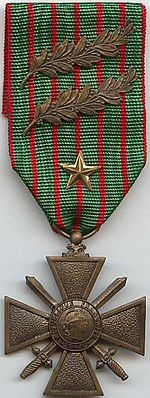
WW1
MASCOT DOG (TOMMY)
A
German Shepherd dog named Tommy was the WW1
Mascot of a Scottish Regiment and always went “over the top” with his
men. He
was wounded on 3 occasions and gassed when his custom-made gas mask was
not put
on in time, he was also briefly captured. He went on to win the French
military
medal, the Croix de Guerre or (Cross of War) for his bravery.
POPULAR
EARLY MOVIES OF 1916
INTOLERANCE
: by D.W.
Griffith.
20,000
LEAGUES UNDER THE
SEA
JUDEX
MOST
POPULAR BOOK OF 1916
RELATIVITY
: by ALBERT EINSTEIN
***********************THE
FUREY’S*************************
The
song (No Man’s Land) or more commonly known as the “Green Fields of
France” was
written by Eric Bogle a Scots / Australian, originally from Peebles.
The song
was made famous by Irish Folk singers the Furey brothers originally
formed in
1974. The band consisted of four brothers who grew up in Ballyfermot,
Dublin.
In collaborations with Davey Arthur they have been known as The Furey’s
and
Davey Arthur . The song The Green Fields of France
lyrics (see below)
The
Green Fields of France
Oh
how do you do young willie McBride,
do
you mind if I sit here down by your graveside
and
rest for a while in the warm summer sun
I’ve
been walking all day, and I’m nearly done
And
I can see by your gravestone you were only nineteen
When
you joined the great fallen in 1916
Well
I hope you died quick, and I hope you died clean
Oh’
willy McBride was it slow and obscene.
CHORUS
: Did they beat the drums slowly, did they play the fife lowly
Did
they sound the death march as they lowered you down.
Did
the band play the last post and chorus
Did
the pipes play the flowers of the forest
VERSE
: and did you leave a wife or a sweetheart behind
In some loyal heart is your
memory enshrined
And
though you died back in 1916, to that loyal heart you’re forever
nineteen
Or
are you a stranger without even a name
Forever
enshrined behind some old glass frame
In
an old photograph torn, tattered, and stained
And
faded to yellow in a brown leather frame
CHORUS
VERSE
: The sun shining down on these green fields of France
The
warm winds blow and the red poppies dance
The
trenches have vanished long under the plough
No
gas, no barbed wire, no guns firing now
But
here in this graveyard that’s still no-man’s-land
The
countless white crosses in mute witness stand
Till
man’s blind indifference to his fellow man
And
a whole generation were butchered and damned
CHORUS
FINAL
VERSE : and I can’t help wonder oh Willy McBride
Do
all those who lie here know why they died
Do
you really believe them when they told you the cause
Did
you really believe that this war would end wars.
Well
the suffering, the sorrow, the glory the shame
The
killing the dying it was all done in vain
Oh
Willy Mc Bride it all happened again and again, and again ,and again.
__________________
1917
“Unbelievably
the war has dragged on for yet
another year, the winter has been excessively cold at home and also on
the
different Fronts. The food shortages are hitting the British and
German’s hard.
The British are going to need to find a solution to the U-boat problem
or she
won’t last out much longer. It is strange how villages and townsfolk
were all
out on the streets cheering the soldiers with flags in hand as they
made their
way across the Channel in 1914. Where are all the flags now? One sad
thing that
has surfaced in the great number of men coughing and spluttering as a
result of
gas attacks.”
*** The
Germans have unleashed unrestricted submarine warfare
as from January 1917 to attempt to cripple Great Britain economically
before
America could render assistance. Also
throughout 1917 Germany began to deploy increasing numbers of fixed
wing
bombers, its first target was Folkestone in May 1917 and then further
raids on
London. ***
MATA
HARI
During
WW1 there was a femme fatal dancer and
courtesan called Mata Hari which was Malay for the “eye of the day”.
She was
charged with employing her sexual charms to weaken French Army officers
into
betraying their country. The exotic sounding Mata Hari was a
41-year-old Dutch
woman, Margaretha Geertruida MacLeod (nee Zelle) who agreed to spy for
the
French in enemy occupied Belgium despite already working for the German
council
in the Hague.
Apart
from MacLeod’s (“was
he from“North-Kilt-Town”?)own
admission
that she had on one occasion passed out-of-date information to the
Germans, the
prosecution could produce no firm evidence of her spying activities
against France.
The trial ended on July 25th 1917 with the
military court at
Vincennes finding her guilty as charged. She was then shot by firing
squad.
__________________
Throughout
1917 Germany began to deploy
increasing numbers of airplane bombers. Their first target was
Folkestone in
Kent in May 19th 1917. London raids, of which
one night-time raid caused
162
deaths in
London’s East End from 14
planes in
June 1917. The German airplane bombing would see the end of the
Zeppelin
bombing. The airplane bombing would continue until May 1918.
To
improve detection, communication and
control, a system was made operational to better deal with this aerial
threat.
It was called the Metropolitan Observation service and it would
encompass the
London Air Defence Area. It would also extend eastwards towards the
Kent and
Essex coasts in-order to anticipate enemy air attacks.
__________________
RED
CROSS DOGS : These dogs were very
important during WW1, They were equipped with first aid in saddle bags
and wore
vests bearing a Red Cross. They saved thousands of lives on both sides
of the
conflict and one dog named PRUSCO was said to have located more than a
100
wounded men in a single battle. Prusco was a French dog that looked
like a
white wolf. He was known to drag the wounded into ditches as a “safe
harbour”
while he summoned rescuers. Another French Dog CAPTAIN found 30
soldiers in one
day. Sadly too many French dogs were being killed in the line of duty
so the
program was discontinued.
WOLF
AND PRINCE were 2 Airedales who were
trained to make 2-mile message runs. They would prove their worth at
the battle
of Vimy Ridge on 9th April 1917. All the
telephones were “down” and
visual signalling was impossible, the dogs were the first to bring
through the
news. The success of the two dogs led to the establishment of an
extended,
British War-Dog programme during WW1.
THE
ZIMMERMANN TELEGRAM
The
Zimmermann Telegram was a diplomatic
proposal from Arthur Zimmermann the German Foreign Minister, made on
behalf of
the German Empire. It invited Mexico to join WW1 as Germany’s ally
against the
USA, in return , Germany would finance Mexico’s war and help recover
the
territories of Texas, New Mexico and Arizona. The telegram also wanted
Mexico
to act as a “go between” to broker stronger relations between Germany
and
Japan.
The
proposal was intercepted and decoded at
the ground-breaking Naval intelligence department at room 40 of the
London
Admiralty. The telegram was passed onto the US Ambassador in London.
Walter
Page then duly forwarded it to Washington to an outraged Woodrow Wilson
who would
declare war via the US Congress against Germany on April 6th.
There
were 3
main events that brought the US into the War
1) The
innocent lives lost at the sinking of the Lusitania .
2) The
Zimmermann Telegram.
3) American
lives lost when U-boat activity was increased.
AMERICA
JOINS THE WAR
For
America
to fund the war the government and the American people would have to
make
savings. One way of conserving food in America would be by having MEATLESS
MONDAYS AND WHEATLESS
WEDNESDAYS. Posters
were circulated by the government : DO
NOT DRINK ALCOHOLIC DRINK ON A MONDAY. “STAY AT HOME AND HELP
YOUR COUNTRY”.
In
the State
of Ohio, Ohioans planted VICTORY
GARDENS to grow their own food and
insure US military
members had the food they needed to be effective soldiers.
The
California State provided over 112,000 soldiers to the US Army and
marines
during WW1.
Shipbuilding
was Florida’s biggest industry outside of agriculture. There were large
shipyards at JACKSONVILLE,
PANAMA
CITY, PENSACOLA, AND TAMPA. Thousands
of men were hired to build the ships needed for
the war effort. The American Troops were trained / drilled along the
firm flat
sands of Jacksonville beach.
To
speed up
the arrival of the American Troops they embarked for France, leaving
their
heavy equipment behind, and used British and French tanks, artillery,
airplanes,
and other munitions initially. When the USA entered the war in 1917
they had no
organized dog units, with the exception of a few sled dogs in Alaska.
They
borrowed a limited number of dogs from the British and French forces
for
Casualty, Messenger, and Guard duty. The Germans had the most advanced
Dog
Units dating back to the 1880’s approximately.
The
American
Troops were marshalled under the command of John Joseph Pershing (1860
– 1948).
He was one of America’s most accomplished generals and was Commander of
the
American Expeditionary Forces. The American Troops would bolster the
spirits of
their European Allies and help in the final push to defeat the Central
Powers.
For
victory
the USA issued WAR
BONDS AND STAMPS AND ALSO LIBERTY LOANS. WAR BONDS sometimes
referred to as
VICTORY BONDS they
were
DEBT SECURITIES. Famous
Opera Singer ENRICO
CARUSO was
to make
in 1917 a gramophone recording of the War Song “OVER
THERE” It
was partly sung in French to show unity with their
French Allies. Caruso also performed the song at one or more War Bond
Rallies.
Although the song was written in 1917 the tune can be heard almost
nightly on
British TV in the form of an insurance type advert fronted by a
good-natured Welshman
singing the song in an opera fashion with the words slightly changed. (oh,
you know the one I mean!)
HELLO
GIRLS –
was the colloquial name for American female switchboard operators in
WW1. They
were formally known as the Signal Corps Female Telephone Operators
Unit. During
WW1 the switchboard operators were sworn into the Army Signals Corps.
They had
to be bi-lingual in English and French, over 7,000 women applied but
only 450
were accepted.
On
the 3rd
of May 1917 the first U.S. destroyers arrived in Great Britain to join
the
British naval forces to fight the German U-boats and surface fleet.
* A
couple of well-known faces from the American Expeditionary Forces
included US
Navy recruit and Hollywood legend HUMPHREY
BOGART, also
working towards the end of the war was ambulance driver and famous
animator WALT
DISNEY. *
SERGEANT
STUBBY
In
1917 a
stray pup wandered into the Yale University campus in America where
members of
the 102nd Infantry Regiment were training. The
Pit Bull Terrier won
over the unit with his antics, participating in drills and even
learning to
salute with his right paw. Private J Robert Conroy adopted the dog,
named him
Stubby and smuggled him to the Front Lines in France. Once there Stubby
was
exposed to Mustard Gas which left him unable to move for several days
and his
eyes were tight shut and weeping a yellow pus. When he eventually
recovered,
the Mustard Gas attack had left him highly sensitive to the noxious
fumes and
was therefore able to warn the 102nd Regiment of
imminent attacks.
He also learned to locate wounded soldiers during patrols.
One
day
Stubby spotted a German Spy and attacked the bewildered man until
reinforcements arrived, this achievement earned him the rank of
Sergeant. In
his 18 months of service, Stubby participated in 17 battles, survived a
series
of wounds, and provided a much-needed boost to the morale of his fellow
soldiers. After the war he returned to America with his owner Conroy
and became
a national icon, leading parades and receiving awards. However there
was one
“bone of contention” between Stubby and his owner Conroy and that was,
Sergeant
Stubby outranked his owner who had only made Corporal!
KAISER
THE CARRIER PIGEON
He
was one of
the longest held prisoners of war in American History, and one of the
longest-living pigeons ever breed in captivity. Kaiser’s story begins
in
Koblenz, Germany in the first week of February 1917 – 1949. There in
Hans
Zimmermann’s pigeon loft a young pigeon or (squeaker) hatched.
After
6 weeks
the young pigeon was turned over to representatives of the Imperial
German
Army. Homing pigeons operated swiftly despite bombardments, dust,
smoke, and
bad weather.
During
the
Meuse-Argonne offensive the USA troops captured German Prisoners and
equipment
as well as pigeons.
By
1945
Kaiser had sired over 75 birds for the army with the help of Lady Belle (His
significant other) On
February 27th 1948 to celebrate
his 31st Birthday the children at the Fort
Monmouth nursery school
held a Birthday Party for Kaiser and made him guest of honour.
THE
BATTLE OF VIMY RIDGE
The
battle of
Vimy Ridge was part of the battle of Arras, in the Nord-Pas-de-Calais
region of
France during WW1. The battle lasted from 9th
April 1917 – 12th
April 1917. There were 4 divisions of the Canadian Corps in the First
Army
against 3 divisions of the German 6th Army. The
Canadian corps were
to capture the German held high ground of Vimy Ridge, an escarpment on
the
northern flank of the Arras front. The final objective, a fortified
knoll
outside the village of Givenchy-en-Gohelle fell to the Canadians on 12th
April.
THE
JELLICOE EXPRESS
Was
named
after John Rushworth Jellicoe 1st Admiral of the British Fleet
stationed at
Scapa Flow and Admiral during the Battle of Jutland in 1916. As the
German
U-boats had stepped up their assault on British shipping it was deemed
more
sensible to carry the men by train up to Thurso, Caithness and that
left just a
short distance to Orkney. For all the men returning home the journey
was
bearable but for all those heading for work it was a long grim journey.
THE
TRAIN RAN EACH DAY FROM EUSTON
STATION AT 6AM AND WOULD ARRIVE AT THURSO AT 3.30PM THE NEXT DAY. THE
DISTANCE
WAS 717 MILES, TAKING 22 HOURS.
The
Jellicoe
Express linked together the
3 great
naval ports in the South of England to Euston Railway Station and then
on to
various Naval Establishments in the North such as Scapa Flow,
Invergordon.
There were few stops along the way but provision was made for
refreshments at
Crewe railway Station. On platform 6 a canteen was provided thanks to
300 women
volunteers who worked for two days to get all the food ready. In time
the Jellicoe
Express took the eastern route north so as to accommodate Naval personnel heading for
Rosyth.
On
the North
line a refreshment stop was set up at Helmsdale Station, one of the few
between
Crewe and Thurso. The refreshments were run by the Women’s Voluntary
service,
later to be called the WRVS who staffed the tea stalls providing tea,
cakes,
biscuits, and cigarettes. For many it would be an opportunity to
stretch their
legs (assuming
they could
find a crowbar and prise themselves off the seat)
As the train
moved further North they would arrive at Forsinard which was the last
stop
before arriving in Thurso. It was here that the engines took on water
and by
coincidence they had arrived in the heart of the FLOW COUNTRY, which is
a
blanket peat covering of over 400,000 hectares. The Flow country is the
UK’s
greatest resource against global climate change. This expanse of
peatland has
trapped over 400 million tonnes of Carbon twice that stored in all UK
forests.
which helps to reduce carbon emissions which is beginning to attract
more
experts. It is also an area of natural ponds and land which is home to
Scotland’s rarest wildlife. The Flow Country is very large and spreads
out
between Caithness and Sutherland where it is the most intact, and
extensive
blanket bog system in the world.
SPHAGNUM
MOSS
: Is one of the Flow Countries most prolific plants It is important for
the
formations of peat. However it has another important function as an
antiseptic
in wound dressings. Sphagnum moss could also absorb twenty times as
much blood,
pus and bodily fluids than cotton and more rapidly. Sphagnum dressings
skyrocketed in the course of the war from, a modest 250 dressings to 1
million
dressings by the Wars end. The Sphagnum would be harvested while it was
wet and
then placed in dryers and any leaves or twigs would be removed.
The
unrestricted warfare of the German U-Boats put many coal ships to the
bottom of
the sea. Although Britain was rich in coal there was a limit to what
they could
afford to lose and also a limit to the ships they could afford to lose.
A
decision was made to re-fuel the ships at Grangemouth but that was
still a long
way from home for many vessels at Scapa Flow so the decision was made
to
operate a series of JELLICOE SPECIALS from the coalmines all the way to
Thurso,
leaving only the relatively short distance from Scrabster to Orkney. By
the end
of the War, 5
Million
tonnes of coal arrived in Thurso on the Jellicoe Specials. During both
wars the
Jellicoe Express transported 500,000
passengers.
THE
BATTLE OF PASSCHENDAELE
The
battle of
Passchendaele was fought between July – November 1917. It was one of
the
Muddiest and Bloodiest battles of WW1 also known as the 3rd
Battle
of Ypres. It is remembered for the appalling muddy conditions, minimal
gain,
and loss of life.
Allied casualties
reached 300,000 At the end of the day all that was left to capture was
a mud
swamp and a destroyed village. So bad were the conditions that many
British
troops drowned in the mud. German shelling opened up large craters in
no-man’s-land, as the British charged they were weighed down by their
back kit
which could weigh 66lb’. Many men would lose their footing with the mud
and
would fall into the
craters which had
filled up with rain-water, unable to escape.
It
was said
of Passchendaele that losing a horse was worse than losing a man, the
sad truth
was that men were more replaceable than horses. Many different factors
conspired to make this battle so difficult. The foul weather at
Passchendaele
had made the ground difficult to advance across. It also kept aircraft
from
acting as spotters over the German Lines. As a result , the artillery
had
trouble targeting the Germans. Even when the British artillery hit the
right
areas, the shells would sink deep into the mud. This battle took place
in the
West Flanders region of Northern Belgium.
HOSPITAL
TRAINS
During
the
First World War, huge numbers of injured soldiers had to be transported
from
the Front-Lines to casualty Clearing Stations, Field Hospitals and
beyond. The
fastest way to do this was by train. Ambulance Trains are essentially
hospitals
on wheels – trains converted to accommodation wards for injured
soldiers,
pharmacy, operating-rooms, and medical staff quarters.
First
World
War British Ambulance Trains could carry around 500 injured servicemen
along
with 50 crew members including orderlies, nurses, and medical officers.
By 1918
British Railway companies had built 51 Ambulance Trains. In the early
days of
WW1, casualties arriving back in Britain were taken from Hospital Ships
at
Southampton to the nearby military hospital at Netley. As more
casualties began
to arrive in greater numbers, (from the Somme etc), Ambulance Trains
took
passengers to newly opened hospitals across the country even as far as
Strathpeffer in the North Scottish Highlands.
THE
SALVATION ARMY
During
the
First World War, The Salvation Army provided motor ambulances,
refreshment huts
in military camps as well as parcels of food and clothing for
combatants. Some
Salvation Army officers served as Chaplains. After the War the
Salvation Army
also assisted with visits to War Graves / cemeteries.
During
both
World Wars The Salvation Army gave support and practical help to families affected by
the bombings or
simply in need of help. They would be seen handing out
clothing, blankets, food, and “Triumph Tea”
from their mobile canteens. There were also other organizations that
rose to
the challenge such as Women’s Institute
and the Y.M.C.A.
R.N.L.I.
(WW1)
The
Royal
National Lifeboat Institution was to see many changes prior to and
during WW1.
In 1854 a cork lifejacket was produced to give the men a greater safety
at sea,
it was designed to be flexible enough so the men could move freely. The
RNLI
moved away from the Sail craft with oars to steam lifeboats The first
Steam
Powered Lifeboat arrived in 1890. It was in service for 40 years and
saved 570
lives.
This
steam
lifeboat had however, caused accidents in particularly in 1900 at
Padstow with
the loss of 8 crew, so in 1900 no new steam lifeboats were to be
commissioned. They
decided on a petrol engine lifeboat that could be started quicker and
get to a
shipwreck much sooner, however it takes time for a large charitable
organisation
to find funds to transfer all lifeboats to petrol engines and maintain
them.
Petrol engine lifeboats first arrived in 1905.
The
R.N.L.I.
usually relied on a wealthy donor for funding however in 1891 the very
first
street collection took place in Manchester with great success. With the
majority of men called up to join WW1 the average age of crew members
increased
to 50
years of
age. During WW1 the R.N.L.I. had 1,808
Call
Outs and they saved the lives of 5,332
In the
County of Caithness and North Sutherland there were quite a few
shipping tragedies
of note. (See Below) These are the majority, but by no means all of the
casualties.
__________________
THE
DUNNET HEAD STEAMER &
CARGO SHIP :
1913 – 1915 was torpedoed by German U-boat U-19 and sunk when 35 miles
E by S
from Duncansby Head, Caithness.
CORTES :
Was a
trawler that was scuttled in the North Sea 68 miles East- North-East of
Wick by
U-boat U-19. On some occasions the term trawler is
actually meant to
mean a minesweeper or a costal patrol boat, refitted and having a
machine gun
attached, however normal fishing boats would fish in designated areas.
THE
STRATHBRAN TRAWLER : was sunk 35 miles East of
the Pentland
Skerries.
HMS
HAMPSHIRE :
Sunk off
west coast of Orkney in 1916 due to a German mine, that took the life
of Lord
Kitchener, only a few survivors.
HMS
NARBOROUGH AND HMS OPAL :
On the 12th
January 1918 the 2 destroyers were on night patrol in the Pentland
Firth and
found themselves in a snow storm. They must have been disorientated as
they ran
aground on the Pentland Skerries and were wrecked. The Skerries are
situated
about 5 miles N-East from John O’Groats as the crow flies or a similar
distance
say, from Thurso – Castletown approximately. The Skerries are a couple
of very
small islands. Of the crews 188 men were lost with just 1 survivor from
the
Opal.
THE
CARIBBEAN :
Was an
Admiralty accommodation ship, ex passenger ship, armed merchant
cruiser. The
ship had taken in a lot of water and got into difficulties off Cape
Wrath 18
lives lost (floundered).
BRITISH
GRAND FLEET : Because
of
the growing U-boat threat to the relatively undefended Scapa Flow. The
grand
Fleet started moving to temporary bases
in Western Scotland and Northern Ireland in October 1914 for a short
time.
CRIMOND :
Sunk 60
miles off Wick.
BOADICEA
: was
a Scout
Cruiser attached to the British Grand Fleet. Boadicea’s bridge was
carried away
by the seas in the Pentland Firth, several men were swept overboard and
drowned.
SUNBEAM
:
Was a 3-mast
schooner with 5 crew, heading for Kirkwall with a cargo load of coal.
Sighted
by U-boat U-25 who approached the schooner on the surface. The crew
were given
3 minutes to abandon ship then 3 shells sank her. The crew were picked
up by a
Naval patrol boat and landed in Wick. Occurred 17 miles East of Wick,
Caithness.
HERMIONE,
SUTTON & LIONORIA:
Three
Trawlers on fishing grounds were captured and sunk by U-36 by gunfire
off Cape
Wrath.
HMS
VANGUARD :
Just before
midnight on 9th July 1917 at Scapa Flow, the
battleship suffered an
explosion, probably caused by an unnoticed stokehold fire heating
cordite
against a near bulkhead containing 2 magazines used for the ships gun
turrets.
She sank almost instantly with the loss of
843
men with just 2
survivors.
Q-SHIP
PRINCE CHARLES : In
the
Atlantic just off the North of Scotland, U-BOAT-36
was
sunk. It was the first success by a submarine decoy
ship working alone.
The
TRAWLERS : CELTIC, GADWALL,
EMBLEM AND CYDONIA : were
captured by U-boat U-41. The trawlers were all on
fishing grounds, however they were all sunk by gunfire on 25th
July
1915. The trawlers were 60 – 70 miles North-West of Hoy Head.
GERMAN
IMPERIAL NAVY :
On the
morning of 21st June 1919 of the 74 ships
interned at Scapa Flow 52
were scuttled within 5 hours.
__________________
Those
interned in the Wick cemetery from WW1 are 29
Commonwealth burials from 1914 – 1918. There is a further 134 Commonwealth
burials from the 1939 – 1945
World War 2, also includes 21
unidentified
sailors of the Royal Navy and 1 unidentified
airman of the RAF. Also 3 Polish
burials and 1 non-war
service
burial. The Wick cemetery is on the South Road : A99.
The
Town of
Wick has always had a strong sea-faring tradition
and this can be seen in The Wick Heritage
Museum at 20 Bank Row, Wick, where many ship-wrecks are documented for
those
interested parties.
Those
interned in the Thurso cemetery from WW1 are 18 Commonwealth
burials from the 1914 – 1918 War. There are also 41 from
1939 – 1945 War. There is 3 unidentified sailors of the Royal Navy
and 2 unidentified
from the Merchant Navy, and
there is 6 Foreign
National burials including 1 unidentified
Norwegian Merchant Seaman.
Entrance
to
the Thurso cemetery lies just off the A9 on the approach to the town.
For
additional information the Horizon’s museum is open again, just as it
was,
except the name has changed to the (North Coast Visitor Centre) High
Street
Thurso. If you are looking for information on a departed loved one who
may have
gone down with any of these wartime ships, information may be found in
the
Thurso or Wick museums / centres as well as local newspaper archives.
There is
also the Castlehill Heritage Centre, a museum on Harbour Road ,
Castletown, and
the Strathnaver Visitor Centre. There are also a smaller number of
Commonwealth
war graves in places such as Castletown, Halkirk and, Melness etc.
Lyness is a
Royal Naval Cemetery at Scapa Flow, Orkney
This
is just
an example of the fate of WW1 ships in the Caithness and Sutherland
area but **many
more ships both military and commercial
have sadly “gone down” in much greater numbers across the British Isles.**
Sadly Commonwealth graves are a common site
up and down the country however it is good for the family members or
the
younger generations to know that they exist and the sacrifice that they
made.
During
both
World Wars the RNLI covered the area of Cape Wrath – John O’Groats and
then
down to E.Sutherland using 3 Lifeboats,
Thurso Lifeboat, Longhope Lifeboat, and the Wick Lifeboat.
__________________
The
first
ever lifeboat was called the “original” and was built in 1789 in South
Shields
by boatbuilder Henry Greathead as a competition winner.
The
Redcar
lifeboat Station has the distinction of being one of the oldest of all
the
lifeboat stations, established in 1802 which pre-dates the RNLI.
CONVOYS
On
May 24th
1917 driven by the spectacular success of the German U-boat submarines
and
their attacks on Allied and neutral shipping, the British Royal Navy
introduced
a newly created convoy system, whereby all merchant
ships crossing the
Atlantic Ocean would travel in
groups. All the shipping would be under the protection of the British
Navy.
It
was
announced that the previous month of shipping loses for Allied and
Neutral
countries were 373
ships. On
May 24th Britain introduced its Convoy System.
Under the new
arrangement a convoy of 10 – 50 merchant ships along with a Troop-ship
carrying
arms and soldiers might be escorted by : A Cruiser, 6 Destroyers, 11
armed
Trawlers and a pair of Torpedo Boats with Aerial Reconnaissance with
equipment
that could detect the movement of Underwater Submarines.
Convoy
gathering points were established along the Atlantic coast of North and
South
America. In the North from Halifax, Nova Scotia to Hampton, Virginia
and all
the way down to Rio
de Janeiro, Brazil.
This was not only to handle the transport of men and arms but also
foodstuffs
and horses and the basic supplies of the war effort.
The
introduction of the Convoy System in 1917 finally marked the beginning
of the
end of German U-boat damage and their hopes of starving Britain into
submission. The U-boats began to be the hunted not the hunter. In
desperation,
to put the Allied ships off the scent the U-boats would fire clothing
and odd
bits and pieces from a torpedo tube which would rise to the surface
giving the
impression that the U-boat was destroyed. The
quality and quantity of food began to rise
in Britain and also in the Trenches. One hazard faced by the Atlantic
sea
traffic that was not the blame of U-boats was the wild Atlantic weather
especially when shipping passed close to Iceland and Greenland’s south
floating
ice. What the
Convoys achieved :
1)
The
Merchant
ships were grouped together maintaining a cohesive unit and protected
by Allied
warships.
2)
Escort
Vessels were able to drop Depth Charges.
3)
Modified
Trawlers could supply surface gunfire attack.
4) Torpedo
Boats
with aerial reconnaissance equipment that could detect underwater
U-boats .
Although the technology fell short of the WW2 Radar it was still a big
improvement from 1914.
Royal
Navy
Deaths during WW1 = 45,000.
Merchant
Seamen Deaths during WW1 = 14,661.
PLASTIC
SURGERY
Many
disfigured men of WW1 were grateful for the efforts of Dr Harold
Gillies,
originally from Dunedin, New Zealand. He was a pioneering Plastic
Surgeon who
developed some of the world’s first successful skin grafts during WW1.
Dr
Gillies developed early Plastic Surgery techniques to treat seriously
wounded
and disfigured soldiers, allowing them to go on to live a full life as
civilians.
In
1917 Dr
Gillies carried out the first modern plastic surgery to rebuild the
face of
sailor Walter Yeo, performing a skin graft around the eyes. Over 3,000
soldiers
were treated at the Queens Hospital in Sidcup, Kent during WW1. He
would go on
to use bone grafts to give the face /nose structure. On the hospital
wards
Harold was easy-going with the men but he refused any mirrors on the
wards in case
some men gave up and refused treatment or others undergoing the
different
stages of reconstruction might “give up”. There was even a hospital
Barber,
trained in special shaving techniques to tend to men’s faces with deep
scars
and missing tissue. The road to recovery could often be a long and
painful one.
MASKS
FOR THE FACIALLY MUTILATED
After
the
War artists and
artisans were enlisted
to sculpt new faces/masks for soldiers disfigured in WW1. The wounded
British
soldiers called the room for facial Disfigurement “The Tin noses shop”.
Located
on the 3rd floor of the London General Hospital.
Francis
Derwent Wood made masks of thin copper that was intricately sculptured
to
reshape the missing or distorted part of the face and was painted to
match photographs
of the men from before their injuries.
American
sculptor Anna Coleman Ladd, who had moved to Paris with her husband at
the
beginning of WW1, created masks modelled from photographs taken of the
men
before their Military duty began.
In
Post-War Germany
artists used paintings and photographs of the facially mutilated as an
anti-war
statement.
In
all
countries who participated in WW1 there was a big demand for men
needing
prosthetic / artificial limbs fitted.
ORIGINS
OF THE P.D.S.A.
Born
in
London in 1870 the oldest of 8 children Maria Dickin became the founder
of the
PDSA charity in November 1917. During WW1, Maria was visiting
impoverished
areas of London helping women and children. She was shocked by the
level of
poverty and wanted to help. It wasn’t until she saw the suffering of
animals in
the slum conditions with their owners too poor to get them veterinary
treatment. She couldn’t let the animals suffer and it was then she
founded the
People’s Dispensary for Sick Animals, the beginning of the PDSA. She
knew that
in helping the animals from suffering you were helping
the owners
also.
In
1917 Maria
opened her doors to the very first PDSA Clinic in a basement in
Whitechapel.
Operations and other consultations were done by gas light. The sign
above her
surgery would say ;
“Bring
your
sick animals, Do not let them suffer.
All
animals
treated, All treated free.”
In
just 4
years there were 7 PDSA Clinics across London treating approximately 40,000
animals. Many more clinics were opened up
and she began treating the sick animals in all parts of the country,
initially
with a converted horse drawn Gypsy caravan and a single Vet. The PDSA
would be
very busy during the WW2 Blitz and it was Maria who instigated the
DICKIN MEDAL
(The Animal Victoria Cross) in 1943. The Dickin Medal did a lot to help
recognise
the importance of the military service done by animals and the
sacrifice they
also make.
“
Maria
Dickin did not possess high government connections nor did she have a
large
quantity of money but what she did have was a deep and profound desire
to stop
animal suffering and she remains proof of what one person can achieve.
”
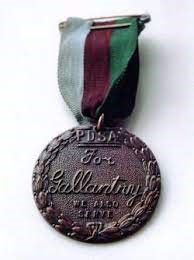
WARRIOR
: POSTHUMOUS AWARD (2014)
Warrior
was a
horse that served with the British Army during WW1 and his bravery was
an
inspiration to thousands of soldiers. He was known as the “horse the Germans
couldn’t kill” surviving
sniper and machine gun attacks as well as having to be dug out of the
mud at
Passchendaele. During his time on the Western Front from 1914 – 1918 he
also
survived being twice trapped under the burning beams of his stable.
An
honorary
PDSA Dickin Medal was awarded to Warrior on behalf of all animals that
served
in WW1. This posthumous award took
place
on the 2nd September 2014 at the Imperial War
Museum, London. The
medal was received by author and broadcaster, Brough Scott, the
grandson of
Warrior’s owner at a presentation compared by Kate Adie. This 66th
Dickin Medal features a bronze “honorary” bar on it’s green, brown, and
blue
stripped ribbon. This was the first
honorary PDSA Dickin Medal presented in the charities history and
honours the
heroism of animals during WW1 in its centenary year. The Dickin Medal
only
began during WW2.
Warrior
went
on to survive the War and Returned home to the Isle of Wight where he
lived
with the Seely family until his death in 1941 at the age of 33.
JIMMY
THE SERGEANT POSTHUMOUS
AWARD (2012)
Jimmy
the
Sergeant was a donkey, born in a First World War Trench who saved
soldier’s
lives on the battlefield and who has recently been awarded a posthumous
Dickin
Medal for bravery
in April 2012. Jimmy
the Sergeant was born in France after a shell wounded his pregnant
mother as
she went into labour during the Battle of the Somme in 1916. Troops of
the
Cameron Scottish Rifles brought the donkey up amid falling shells and
gunfire
on the Frontline. The men found a discarded bottle, cleaned it out, and
Jimmy
was weaned on tins of evaporated/condensed milk. The troops all took a
turn at
keeping the donkey safe, warm, and spent time with him.
Jimmy
spent
the next 2 years in the army, carrying equipment for the soldiers, he
was even
taught to raise his hoof in salute with the troop of Cameronians. Jimmy
also
played an important role in keeping up the morale of the troops, even
if it
just acted as a distraction from the horror of what was all around
them. Jimmy
was wounded 3 times by shell fire during his 2 years on the Front Line.
He was
given the title of honorary sergeant with 3 stripes on his bridle.
At
the end of
the War he was demobbed and in 1920 he was sold to a woman at a charity
auction
in Peterborough, Cambridgeshire. Throughout the next 23 years Jimmy
would be
ever present at a series of charity events, raising thousands of pounds
for the
RSPCA. After his death he
was buried in
Peterborough’s Central Park in 1943 and a monument was erected. A
mounted
display at the Cameronians museum in Hamilton, Scotland assures Jimmy’s
place
in history is not forgotten.
*The
key role for donkeys and horses during WW1 was to get supplies to the
Front
Lines. Lorries were good on proper roads but they could not cope with
uneven
terrain and heavy rain / mud. *
MOST
POPULAR EARLY MOVIES OF
1917
CLEOPATRA
STRAIGHT
SHOOTING
TOM
SAWYER
BEST
OF BOOKS FROM 1917
ANNE’S
HOUSE OF DREAMS : (Anne of Green Gables).
**********************RUPERT
BROOKE*********************
The Soldier, a
sonnet by Rupert Brooke was
published in 1915 in the collection of 1914. Perhaps his most famous
poem. It
reflects British sorrow and pride in the young men that died in WW1. He
was
born in Rugby, England in 1887 and died aged 27 at Skyros, a Greek
Aegean
Island . He died from blood poisoning when on route to active service
in the
Dardanelles. He died on a hospital ship and was buried in *************an olive grove on the
island.************
THE
SOLDIER
“If
I should die, think only
this of me : That there’s some corner of a foreign field. That is
forever
England. There shall be in that rich earth a richer dust concealed ; A
dust
whom England bore, shaped, made aware, Gave once her flowers to love,
her ways
to roam, A body of England’s breathing English air, Washed by the
rivers, blest
by suns of home. And think, this heart, all evil sheds away, A pulse in
the
eternal mind, no less. Gives somewhere back the thoughts by England
given ; Her
sights and sounds ; dreams happy as her day ; And laughter, learnt of
friends ;
and gentleness, ‘n hearts at peace, under an English heaven.
“Well
the War
has struggled on for another year, with no end in sight. The convoys
have at
last removed the stranglehold the U-boats have had on Allied shipping.
The food
supplies were improving for the men at the Front and the civilians back
in
Britain but Germany was still suffering badly with poverty, lack of
food and an
expensive war to fund. The additional troops from America have given
the Allies
a much-needed boost.
Around Great Britain there
appears an array of
disabilities, facial, bodily, and internal, at first these were seen as
shocking
or horrible but the more arriving back from France in these states, the
more it
seemed to be excepted. In many towns and cities family were just glad
to see
them alive!”
1918
THE
ROYAL FLYING CORPS / ROYAL AIR
FORCE
A
Royal
Flying Corps was established in 1912 as a unit of the British Army. It
was set
up to investigate the possible use of manned aircraft in the capacity
of
Communication, Scouting and Reconnaissance activities. A major concern
had been
the protection of shipping movements between the Royal Naval Dockyard
at Rosyth
and the Royal Navy anchorage at Scapa Flow on Orkney. With the outbreak
of WW1
in 1914 the Admiralty was tasked with establishing a string of home
defence
airfields.
With
that in
mind the Montrose Air Station in Angus on the eastern seaboard of
Scotland
would be the first to go operational in 1913. When the Great War ended
in 1918
Montrose continued as an Air Training Station until it was closed down
in 1920
(remains a museum). The equipment and stores were moved to Fife to set
up RAF
Leuchars. The Royal Flying Corps existed until
1st April 1918, the services were
then merged to form the
Royal Air Force (RAF). At the wars end there were 5,182
pilots
in service. Casualties from 1914 –
1918 total 9,378
killed
or
missing with 7,245
wounded.
In
total there was 6,942
Tons of
bombs dropped. Before the Battle of the Somme the Royal Flying Corps
mustered
421 Aircraft with 4 kite Balloon Squadrons and 14 Balloons.
THE
RED BARON
The
most
feared fighter pilot of WW1, Germany’s Baron von Richthofen was killed
by a
single bullet on 21st April 1918. The bullet came from Canadian pilot
Roy Brown with help
from British and Australian ground artillery. By the time of his death
, the
“Red Baron” had notched up 80 kills. It is believed that he would order
up a
silver trophy for each plane shot down. The British gave him a burial
with full
military honours.
* Germany’s
Paris Gun, a WW1 artillery cannon could bombard the French capital from
70
miles or 112 km. The gun could be fired so high that the
rotation of the
Earth affected its trajectory. The weight and size of these big guns
meant they
had to be transported by rail. *
In
Springtime 1918 a deadly disease
began to sweep across the planet. It would infect a 1/3 of the world’s
population and would leave 50 million dead. It arrived in the U.K in
April
1918. It was called Spanish Flu.
__________________
On
March 3rd,1918
the Russians finished fighting and had to sign a treaty with the
Central Powers.
The Bolsheviks had to buy their way out of WW1.
THE
GERMAN SPRING OFFENSIVE OF 1918
In
1918: German
Field Commander General Erich Ludendorff on 21st
March launched a
massive offensive on the Somme. He hoped to strike a decisive blow
against the
Allies and convince
them to negotiate
for peace This was done in a bid to break the Allied line before fresh
American
reinforcements could arrive. Crack German Troops advanced rapidly along
a
60-mile Front and the Allies have already been forced back several
miles.
British troops are bearing the brunt of the attack which was the
German’s first
major breakthrough since the early days of the war. The battles ran
from 21st
March – 18th July
Delays
in
reinforcing the British Line were caused by French Generals arguing as
to
whether they strengthen the line with the British or defend Paris. Casualties on both sides
were very high. The
German’s were also taking advantage of the German divisions that had
been freed
up on the Eastern Front since the Russian withdrawal from the War. The
German
Spring Offensive was also called Kaisers chlacht
or (Kaisers battle), and they were a series
of attacks along the Western Front.
When the German’s entered
the vacated British
Trenches they found far greater quantities and quality of food that any
German
troops had seen. Even more damaging was the lie they were told by their own senior
officers that German
ships had blockaded all British Ports
and that Britain was on the brink of starvation. Word
swept through the
ranks like wildfire, not long after, the Allies launched a
counter-offensive
and soon re-took their former positions. It was now the turn of the
Allies to
gain the upper-hand, this time decisively.
* The
patriotic feelings that had prevailed in Germany was now collapsing
owing to
increased civilian starvation and economic hardship. *
On
the night
of 22nd – 23rd April 1918
the Royal Navy attacked the
German occupied towns of Ostend and Zeebrugge, in an effort to block
the canals
that linked the 2 cities to the German Naval Base at Bruges
THE
BATTLE OF ESTAIRES AND LYS
The
Battle of
Estaires was one of the opening phases of the Battle of Lys. It was
fought
between April 9th – 11th 1918.
15 British Divisions took
part and a 2nd Portuguese division. Many allied
soldiers were
blinded by Mustard Gas and had to be led from the battlefield. *When
you see old newsreels of troops with
their eyes bandaged, being led from the battle-field in a line,
shoulder to
shoulder, this is the effects of mustard Gas. (heart-breaking) *
The
Battle of
Lys, also known as the 4th Battle of Ypres and
was fought from 7th to
29th April 1918. It was
part of a German Spring Offensive in Flanders during WW1. The gains at
the
Battle of Lys were the last the Germans made in WW1. The German’s
struggled to
maintain the momentum, partly due to logistical issues. The fast-moving
Stormtrooper units could not carry enough food and ammunition to
sustain
themselves for long. Their army could not move in supplies and
reinforcements
fast enough to assist them.
The
fixed
wing bombing would see the end of the Zeppelin bombing and the German
fixed
wing bombing finished in May 1918. Germany carried out 51
Airship Raids and
52 Fixed Wing Bomber Raids. Mainly on
England and they dropped a total of 280 Tons of bombs.1,413 killed and
3,409
wounded.
THE
ALLIES 100 DAY OFFENSIVE 1918.
THE
BATTLE OF AMIENS
The
Battle of
Amiens began in dense fog at 4.20 am on August 8th,
1918. This phase
of the Allied offensive was better known as the 100-day offensive which
would
be a turning point in the war and would ultimately lead to the end of
the War.
Allied Forces advanced over 7 miles or 11km on the first day
spearheaded by
Australian and Canadian Corps. It was one of the greatest advances of
the War.
According to Erich Ludendorff, he called it “The black day of
the German
army”. The Allies concentrated their main forces in the
essential areas of
the Channel Ports and the rail junction at Amiens. Despite some
successes for
the Germans they suffered heavy casualties and the land won was of
little
strategic value. Approximately 30,000
German
soldiers died during the Battle of Amiens.
THE
BATTLE OF MESSINES
Messines
was
one of dozens of clashes between Germany and Allied forces surrounding
the
Belgian town of Ypres. On the 28th -29th
September the
area was retaken by British Forces. It was at the Battle of Messines
that the British
2nd Army tunnelled
all the
way to the German Trenches. Then they detonated simultaneously 19
massive mines
that killed thousands of German Troops. The blast/ vibration could be
heard in 10 Downing
Street. It was the
biggest blast in the world, out-with the nuclear explosions of WW2.
By
late
September the Allied forces were facing the Hindenburg Line, a series
of
heavily fortified German defences.
THE
BATTLE OF St QUENTIN CANAL
On
the 29th
of September the Allies broke through the strongest sections of the
Hindenburg
Line. * It
was now
clear that Germany could not win the War. *
The
100 Day
Offensive lasted from 8th August 1918 –
11th November 1918.
German
attacks in the war had all but finished by the summer of 1918.
THE 2nd
BATTLE OF CAMBRAI
The
2nd
Battle of Cambrai was a battle between the British 1st,
3rd
,and 4th Armies, against the German Empire
forces during the Hundred
Day Offensive of WW1. The battle took place in and around the French
city of
Cambrai between the 8th – 10th
October 1918. The battle
incorporated the use British tanks with over 300 taking part. The
British
gained some considerable ground in under 36 hours. The British tanks
that had
only partly delivered at the Somme was now living up to its full
promise.
LAST
U-BOAT ATTACK OF WWI
Late
into WW1
U-boat 116 was tasked with penetrating Scapa Flow and destroying as
many
British ships as possible. This they hoped would even the odds for a
last
attack by the German High Seas Fleet. An earlier attempt to confront
the
British Grand Fleet had been frustrated by the German port of Kiel’s
(sailor’s
mutiny) in Germany. U-boat 116 left Heligoland U-boat base on 25th
October 1918 but German intelligence was poor at this stage of the war
and they
did not know that Scapa Flow had been empty since April and the British
Fleet
were based in Rosyth on the Firth of Forth. U-boat 116 continued on her
way to
Scapa Flow but was destroyed by the new technology of a magnetic mine
that lay
on the seabed and was triggered by U-boat 116.
________________
A
war that
had virtually begun at Mons in 1914 would be finished at Mons when the
Canadians reached the town at 4am on the, 11th
November 1918.
Fighting on the Western Front continued up to the last minute before
the
Armistice came into effect.
“The
first and last British
soldiers to die in WW1 were Privates John Parr and George Ellison and
are both
buried in St Symphorien cemetery in France, and they face each other
only yards
apart.”
COMMONWEALTH
WAR GRAVES COMMISSION
The
Commonwealth
War Graves Commission is an inter-governmental organisation of six
independent
member states whose, principal function is to mark, record and maintain
the
graves and places of commemoration of the Commonwealth of Nations
military
service members who died in the Two World Wars.
Founded
in
1917, Founder: Fabian Ware, Headquarters : Maidenhead
The
Commonwealth
War Graves Commission cares for over 1.1million
Commonwealth War Graves at more than 23,000
locations
across 150
countries and territories.
“Perhaps
tomorrow you’re planning to go down to the beach or tomorrow you might
be
having a night out with friends or perhaps you’re picking up the
grand-kids or
watching football. It’s worth remembering the Men, Women and Animals
that died
in WW1, ---- “WHEN YOU GO HOME, TELL THEM OF US AND SAY, FOR THEIR
TOMORROW WE
GAVE OUR TODAY.”
THE
ARMISTICE
On
11th
November 1918 what has come to be called the Great War has ended. After
4 years
and 97 days the guns finally fell silent today. The Armistice was
requested on
November 7th by the German High command under
Paul von Hindenburg.
In a carriage of Marshal Foch’s train in the forest near Le Francport.
Foch,
General Weygand, and British Admiral
Rosslyn Wemyss accepted the German surrender from a
civilian, Reichstag
Deputy Matthias Erzberger, and 2 junior generals. The German High
Command had
no intension of getting involved in surrender negotiations and stayed
away.
The
Kaiser
took his train and fled to neutral Holland to live. He was advised to
abdicate
as his input would make peace negotiations much more difficult. He left
in a
huff blaming his own people for their lack of respect for him. Germany
was to
hand over a large number of Machine Guns. Aircraft, U-boats, Heavy
Guns,
Locomotives, Wagons, and Lorries. With the Surface Fleet being interned
at
Scapa Flow.
On
the 11th
November 1918, this was Victory Day in Great Britain,
as a war weary nation celebrated the peace. At
11am to the accompaniment of church bells and fireworks, the all-clear
was
sounded for the last time with bugles and sirens. Factories closed and
there
were scenes of unprecedented public revelry and rejoicing as what
seemed to be
the entire population took to the streets. They were all waving flags
and
raising servicemen shoulder-high.
Big
Ben
struck 1 o’clock for the first time in four years and the clock
backlights
would be switched on for the first time since they posed a (beacon
threat) for
enemy Zeppelins. Hugh crowds gathered outside Buckingham Palace and the
police
turned a blind eye to the licensing laws. All the pubs stayed open
until they
had been drunk dry! * In
1918
British Confectioners Bassetts launched their Jelly Babies to celebrate
the end
of WW1. They called them Peace Babies. *
__________________
The number of lives lost in
WW1 is believed to
be 9
Million. With
another 27
Million injured.
The
War is thought to have cost the Allies £68.5
Billion or $126 Billion. The
War would cost the Central Powers £32.5
Billion or $60 Billion. It
had been
the most destructive war mankind had ever seen.
AUSTRIA
/ HUNGARY
By
this time
in the war, Austria and Hungary was fairing little better than Germany.
Austria
/ Hungary had lost 460,000 because of famine, cold and epidemics
including the
Spanish Flu, especially in Austria where under-nourishment and poverty
remained
a problem.
14
POINT PLAN FOR PEACE
The
14 points were conditions applied to the
nations in-order to avert another catastrophe like WW1. In summary
these were
the most important points.
1)
OPEN
DIPLOMACY WITHOUT SECRET TREATIES.
2)
ECONOMIC
FREE TRADE.
3)
DECREASE
IN ARMAMENTS.
4) CREATION
OF A LEAGUE OF NATIONS.
5) RECONSTRUCTION
OF EUROPEAN LAND BORDERS AND SIZE.
6)
After
WW1 the
size of Austria and Hungary were greatly reduced. Germany was also
reduced to a
lesser degree. A new country was formed called Czechoslovakia which was
intended as a buffer between Germany and Austria. The Balkan countries
would
unify under the Kingdom of Yugoslavia
in
December 1918. The city of Alsace was returned to France for “the time
being”.
GERMAN
SHEPHERD OR ALSATIAN?
After
the
wars end, British
Soldiers were bringing
these remarkable German Shepherd dogs back to Britain for the first
time. The
men would tell of the dog’s heroic deeds displayed in battle. It was
feared
that with the name “German” the British would have no time for the dogs
so in
1919 The Kennel Club changed the dog’s name to Alsatian Wolf Dog. The
name
Alsatian comes from the Alsace region of France which borders Germany.
The dogs
were given the name Alsatian or from Latin (Alsatia) because the first
dogs to
arrive in Britain were with British soldiers making their way back from
Alsace
which was German Territory during WW1. In fact Alsace – Lorraine
including
Strasbourg and Metz have been fought over between France and Germany
periodically
since 1648.
For
the
German Shepherd dogs that survived the War and famine in Germany, there
were
more hurdles to overcome. Surviving German Shepherds were often sterile
or gave
birth to a higher number of (still-born) pups as a result. Canine
diseases ran
rampant, however German Shepherd Breeders in Germany, Britain, USA, and
other
countries worked hard to restore the breed.
Medic
dogs
were trained to pull off the Bringsel. A kind of short leash that was
part of
the Prussian uniform. They would then take it from a wounded soldier
and give
it to a medic. The dog then led the medic to the soldier. While the
soldier was
being treated, the medic dog would comfort the injured.
BEST
OF EARLY MOVIES 1918
TARZAN
AND THE APES
A
DOGS LIFE : (Charlie Chaplin)
THE
BOND : Fund Raising short production by Charlie Chaplin at
his own personal expense for the UNITED STATES 4th
LIBERTY LOAN
DRIVE during WW1
MOST
POPULAR BOOK OF 1918
RETURN
OF THE SOLDIER : By Rebecca West, tells of the plight of
the return of the Shell-Shocked soldier.
*******************SIEGFRIED
SASSOON******************
Siegfried
Sassoon was a WW1 poet. Born into a Jewish family in 1886 his early
life
greatly contrasting his war experiences. His poet friend Robert Graves
convinced the review board that Sassoon was suffering from Shell-Shock
and he
was sent to the military hospital in Craiglockhart where he met and
influenced
fellow poet Wilfred Owen. Sassoon went public with his protests against
the war
which could have “landed him in hot water”. See below,
a strong poem from Siegfried Sassoon which
“pulls no punches”.
SUICIDE
IN THE TRENCHES
“I
knew a simple soldier boy,
Who grinned at life in simple joy,
Slept
soundly through the
lonesome dark,
And
whistled early with the
lark.
In
winter trenches, cowed and
glum,
With
crumps and lice and lack of
Rum,
He
put a bullet through his
brain,
No
one spoke of him again
You
smug faced crowds with
kindling eye,
Who
cheer when soldier lads
march by,
Sneak
home and pray you’ll never
know
The
hell where youth and
laughter go.
__________________
1919
“Well,
the
War is finally over to the great relief of many, some say this was the
War to
end all Wars while other say the next war was beginning before the ink
was dry
on this armistice document. It seems there is a lot of unfinished
business,
tensions, and many feel that Germany has been severely punished by the
terms of
the Treaty of Versailles. Anyway if you think that all the suffering
and pain
had ended with the Armistice, then
think
again”
HMS
IOLAIRE
HMS
Iolaire
was a British Admiralty ship that sank on the 1st January 1919 in a stretch of
water known as
the Minch situated between Skye and the Western Isles. It was to be the
worst
maritime disaster in British waters during the 20th
Century. The
Iolaire was carrying soldiers and sailors that had fought and endured
the Great
War and were now coming home to loved ones on Hogmanay (New Year’s
Eve). This
was promising to be the greatest New year of all. Loved ones on the
Western
Isles would be Making Broth and Black Bun and various cakes, with
Whisky for
the men and sherry for the women “to take in” the New Year. There would
also be
home entertainment for later in the form of Fiddle music, Accordion
and,
singing.
When
the ship
loaded up in the mainland port of Kyle of Lochalsh there would have
been some
extra passengers who were given a place on the boat on account of it
being
Hogmanay (It was not an excessive amount). The ship left Kyle and made
its way
towards Stornoway, it was 31st December but
later at 2.30 am, on New
Year’s Day the ship hit rocks less than a mile from
Stornoway harbour.
Almost ¾ of those onboard perished in the sea with only 75 known
passengers
surviving the disaster.
Sadly
many
factors conspired to seal their fate. At 2.30 on a Scottish Mid- winter
night,
the sky would be dark the sea would be cold and likely it was stirred
up. The
men would of likely been dressed in heavy boots and overcoats / full
uniform, with
the extra passengers who boarded at Kyle may-of made a small
difference.
On
a clifftop
not far from Stornoway a memorial had been built to those who perished
that
night.
_______________________
GERMAN
FLEET SCUTTLED AT SCAPA FLOW
Shortly
after
the end of the First World War, the German Kaiserliche Marine was being
scuttled by its sailors while interned in the Royal Navy Base at Scapa
Flow.
The scuttled fleet was a deliberate act of sabotage ordered by a
commander who
refused to let his ships become the spoils of war.
52
warships
were sunk in one day beginning at 10.30 am, it was the greatest loss of
warships in history and 9 German sailors died that day becoming the
last
victims of WW1.
Once
at Scapa
Flow most of von Reuter’s 20,000 men were sent back to Germany leaving
a small
number of Skeleton / caretaker crews. On the morning of 21st
June
1919 the British Fleet left Scapa Flow for exercises, and von Reuter
saw his
chance. The crew started to open all the stop cocks and sea valves as
the ships
slowly sank in the harbour. The last defiant gesture was to replace the
flag of
the Imperial German Navy one last time. On that day there was an
astonished group
of children on a boat trip around Scapa Flow as the ships slowly sank
beneath
the water.
Of
the 74 ships interned at Scapa Flow 52
were scuttled within 5 hours. In Germany, von Reuter was praised as the
man who
had preserved the honour of the High Sea’s Fleet.
PEACE
TREATY OF VERSAILLES
May
7th
1919 ,The WW1 Peace Treaty was signed by the Germans at Versailles
officially
ending over 4 years of devastating war. The Treaty was presented at the
Trianon
Palace Hotel at Versailles. The German’s considered the terms
excessively harsh
and initially refused to sign, however they changed their minds when
threatened
with an occupation of Allied troops.
Although
fighting in WW1 finished in 1918 the War did not officially end until
October 3rd,
2010 – 92 years later. When Germany finally settled
its war debt by
paying a last instalment of $90,000,000 dollars. Reparations imposed on
it by
the Allies. The Treaty also stripped Germany of her overseas colonies,
she also
lost her Navy, and her Airforce and her Army was restricted to 100,000
men. Public
opinion in Britain and the USA found the terms too harsh, only France
found the
terms too mild as bitterness of 4 years of German occupation in France
ran
high.
PEACE
DAY
In
Britain
the official War’s End (PEACE DAY) was 19th July
which was also a
Bank Holiday. UK cities also saw spontaneous parties when the Armistice
was
announced on 11th November 1918. The real
celebrations however would
come after the signing of the Treaty of Versailles in June 1919.
On
July 19th 1919
there would be Street Parties organized
by residents on- mass
in the UK which
started up as “PEACE TEAS” as a treat mainly for children in those
times of
hardship. Many children were Poor and Orphaned due to the effects of
the War
and the Spanish Flu. There would be long rows of tables and chairs and
lots of
colourful bunting. There was also bonfires, fireworks, and concert
parties to
celebrate the end of War.
*
If you look at old pictures or film footage
of the celebrations of 11th November 1918 or /
and July 19th
1919, you may find
quite a few people
with sullen faces. This is because many men lost their friends during
the war
and many women lost their husbands, for them what celebration was there
in
that? *
SOME
SMALL WW1 ADDITIONS
The
term
Taffy or Taff when referring to Welsh soldiers has its origins in the
Taff-Ely
Valley in South Wales. Due to the decline in the coal industry during
the 20th
Century many men were left unemployed, this led to a big enlistment for
World
War 1 and World War 2. As a large number of Welshmen came from Taff, SO
THE NAME CAME TO REPRESENT
ALL WELSHMEN.
During
WW1
the ordinary British soldiers would gather small personal items in the
Trenches
either to keep or take home to loved ones or friends. These items were
named KEEP-SAKES
or MOMENTOS
It was only
through sharing Trenches with the French that the word SOUVENIR
became
common place.
The
British
army may have learned a few Colonial sayings over time but that was
small
compared to what the British troops learned from Indian troops when sharing Trenches in WW1.
KHAKI :
Which
describes the colour of the British Army clothing. This word originates
from
the Hindi word meaning DUSTY
or EARTH.
DEKKO :
meaning to
take a look is taken from the Hindi word Deckna,
(TO LOOK).
CHIT :
Comes from
the Hindi word CHITTHI
meaning a SLIP
OF PAPER OR A VOUCHER
(used
instead of money)
PUTTEE
:
Is adapted
from the Hindi word PATTI
which
means BANDAGE.
In
WW1 it was
the leg wrapping you see on British soldiers from the ankle to the
knee.
__________________
During
the
War years in Britain the cost of food doubled
due to the amount of food sent abroad for the troops and
also the wastage
by U-boat attacks.
__________________
THANKFUL
VILLAGES : Were the name given to a small minority of towns / villages
where
there were no WW1 fatalities. These villages would look odd, in having
no War
Memorial although there would be some form of memorial in the village
churches.
The total of WW1 British “Thankful villages” were only 32.
__________________
The
tradition
of an Annual National Silence to remember the dead of WW1 was the idea
of Australian
journalist and war veteran Edward George Honey. His idea was a popular
one so
on 11th November 1919 the first Remembrance Day
began, originally
with a 2-minute silence.
A tomb for the UNKNOWN
SOLDIER was put in
place in London, Paris, and Arlington Cemetery in 1921. On November 11th
1954 , it was renamed Veteran’s Day in America.
In
1920 the
first full session of the League of Nations begins in Geneva with 5,000
representatives from 41 Nations.
-------------------------
The
well-known
saying, “never
take a 3rd
light from the same match” originated in the Trenches
of WW1. If men were
on look-out duty and lit a match this would alert the enemy. If a
second person
took a light from the same match the enemy would take aim. If a third
person
took a light from the same match, Bang!
On
11th November 1921 the British
Legion holds its first POPPY DAY to raise money for the wounded of WW1.
Having
ordered 9 million poppies they all sold out immediately raising over
£106,000
Pounds. The money was used to help WW1 veterans with employment,
housing, and
various social needs. Throughout Britain poppy factories were set up
with the
poppies being made by disabled ex-servicemen. The British Legion became
the
Royal British Legion in May 1971, on is golden anniversary.
________________
One
of the reasons why the French mutinied
during 1917 was because,
unlike the
other Allies that were “rotated” out of the trenches for a period of
time the
French Military Commanders never allowed the French troops any respite
from the
Front Lines.
LAWRENCE
OF ARABIA
Thomas
Edward Lawrence, known as Lawrence of
Arabia (1888-1935) was a British Soldier born in N. Wales. Before WW1
he
travelled in the Middle-East, studying Crusader castles and
excavations. In
1914 he joined Military Intelligence and was sent to Cairo where he
became a
member of the Arab Bureau. His exploits received so much publicity that
he
became a legendary figure. He also became
the liaison officer to the Arab revolt under Emir Faisal who was the
son of a
Sherif of Mecca, (A Muslim ruler, magistrate, or religious leader).
Lawrence
was present at the taking of Aqaba
in 1917 and Damascus in 1918 from the Turks. Further military victories
in
Palestine and Mesopotamia resulted in a Turkish Armistice on 31st
October 1918, removing the Ottoman Empire from the Middle East.
Lawrence’s
conscious was waying heavy as he
had promised much to the Emir Faisal but he could not deliver as the
British
Top Brass had other ideas. In 1918 Lieutenant Colonel Thomas Lawrence
was to
shock King George V by refusing to receive from him the Order
of Bath, which
is a British order of chivalry founded by George 1 in 1725
and the
D.S.O. or Distinguished Service Order. Lawrence (28) was
deeply
disillusioned with the outcome of the recently ended hostilities in
Palestine.
He had genuinely promised much to the Arabs however the British
Military would
not back him up. He retired in 1935 and was killed in a motor cycling
accident
near his home in Dorset.
* The
7th
Battalion Essex Regiment was a volunteer unit of Britain’s Territorial
Army
first formed in 1860 in the Eastern suburbs of London. In 1915 during
WW1 the Battalion
served as infantry at Gallipoli and in Palestine. *
GERMAN
HYPER-INFLATION OF 1923
There
was a range of issues that led to
Germany’s inflation woes :
The
poor harvest in 1916.
The
blockade of German Ports.
The
German Government had taxed too little
and printed too much money over the war years and beyond.
Germany’s
need to pay reparations to the
victors of WW1.
Hyperinflation
in Germany in 1923 meant that
their currency and savings were virtually worthless. In order to buy a
loaf of
bread you would need a wheel-burrow stacked high with Deutschmarks. If
you
visited a café for a coffee and fancied another cup, by the time it
took to
drink the first cup the 2nd cup would have
doubled in price.
The
biggest culprit to hyperinflation in
Germany was successive German governments printing too much money and
taxing
too little over a long period. It was shaky times for the new German
Republic
of Weimar with the nation “rudderless”. The Kaiser had abdicated
leaving
extremists to fill the vacuum. On the far left you had the Communist
Party and
on the far right you had the Fascist party led by former WW1 corporal
Adolf
Hitler. The rest is history.
__________________
MOST
POPULAR EARLY MOVIES OF
1919
J’ACCUSE!
(French Movie)
MALE
AND FEMALE : (Cecil
B. DeMille)
BROKEN
BLOSSOM’S : (USA)
MOST
POPULAR BOOK OF 1919
MY
MAN JEEVES : By
(P.G.Wodehouse)
“
WISHING YOU : AND ALL YOUR
FURRY PALS : THE VERY BEST.”

REVELATION
21 VERSE 4 : “He will wipe every tear from their eyes ;
there shall be an end to death, and to mourning and crying and pain.”
JOHN
16 VERSE 33 : “These things I have spoken unto you ; that in me
you might have peace. In the world ye shall have tribulation : but be
of good
cheer I have overcome the world.”
PHILIPPIANS
CHAPTER 4 VERSE 6 : The Lord is near; have no anxiety,
but in everything make your requests known to God in prayer and
petition with
thanksgiving.”
THE
END
